Uncovering Yagyū
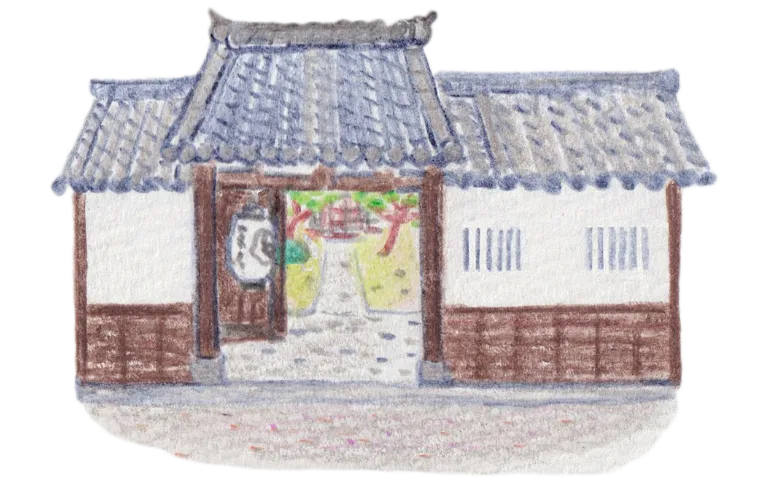
Located in the hills of eastern Nara City, the village of Yagyū is deeply associated with the Yagyū clan and was once the seat of the Yagyū Domain during the Edo period. The former residence of the Yagyū family retainers now houses the Yagyū Tourism Association, making it a useful base for gathering information on local sights. The Yagyū Kaidō, the historic road linking Nara city centre with Yagyū village, stretches for around 15 kilometres, with Enjōji Temple lying almost exactly at its midpoint. The area known as Yagyū is fairly extensive, and its points of interest are spread out across the region.
In the western districts of Ōyagyū and Sakahara, notable sites include Yashū Yamaguchi Shrine, Nanmyōji Temple, Nagao Shrine, and Ashi-ita Jizō. In the eastern Yagyū area, visitors will find places closely connected to the Yagyū family such as the Yagyū Clan Retainer Residence and Hōtokuji Temple, alongside other evocative sites including the Atai Stone Buddha, Ittōseki Split Boulder, Amanoiwatate Shrine, and Hōsō Jizō. Slightly farther afield lies Nyū Shrine, and together these locations offer many opportunities to encounter traces of ancient rock-worship traditions.



The Historic Yagyū Kaidō
The former domain of the Yagyū family lies in the mountains of eastern Nara. The Yagyū are famous for developing the Yagyū branch of Shinkage-ryū swordsmanship, which incorporates Zen Buddhist philosophy into sword technique. The style’s concern with mental and spiritual development made it popular among the ruling Tokugawa shoguns, many of whom received personal instruction from members of the Yagyū family.
When they were not serving the shogun in Edo (now Tokyo), the Yagyū trained at a dojo near Hōtokuji Temple, in the remote mountains of Nara. They traveled by the Yagyū Kaidō, a road that begins at Naramachi and heads east into the mountains, ending at Hōtokuji Temple.
Along the Yagyū Kaidō are sites related to Kasuga Taisha Shrine and Kōfukuji Temple, two powerful religious institutions in central Nara. One is a cluster of Buddhist relief carvings dating from the eighth to fourteenth centuries. Among the reliefs is a carving known as “Decapitated Jizō” (Kubikiri Jizō), which depicts Jizō, a guardian of travelers, but has an unnaturally straight fracture across the deity’s neck. Legend has it that the top of the relief was severed by the swordsman Araki Mataemon (ca. 1598–1638), who used the stone image to test his blade.
Beyond the stone buddhas is Enjōji Temple, which enshrines a statue of Dainichi Buddha. This National Treasure was carved by the master sculptor Unkei (ca. 1150–1223). Farther down the road is a group of Shinto shrines, including Yasyū Yamaguchi Jinja, Nagao Jinja, and Niu Jinja. Each shrine features structures that were once part of Kasuga Taisha or modeled after it.
At the end of the route is Hōtokuji, the Yagyū family temple located in the historic center of the domain. The area is dotted with other spots related to the family, including Ittōseki Boulder. According to legend, Yagyū Muneyoshi (ca. 1527–1606), the first head of the family, sliced this massive boulder in half.
The Yagyū Kaidō is still walked today, and the greater Yagyū area continues to attract visitors interested in Japanese history, religious practices, and the legacy of the Yagyū family.
みどころ
-
Yasyū Yamaguchi Jinja Shrine
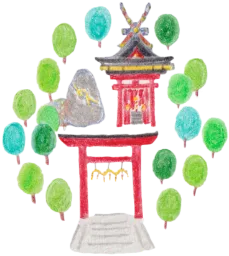
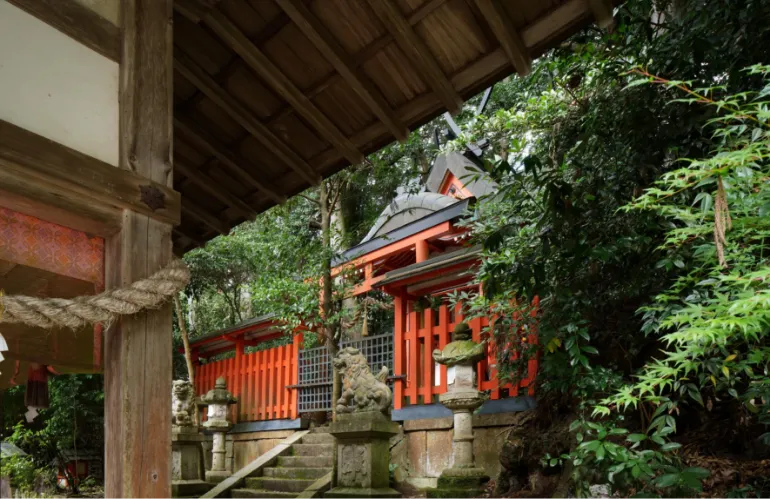
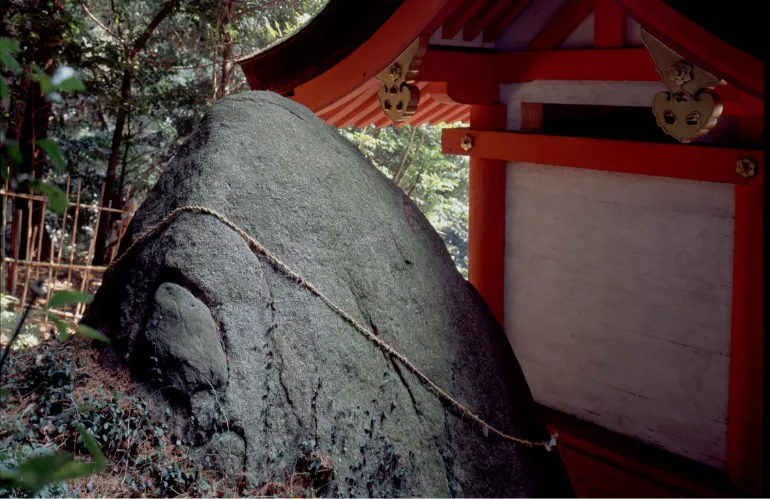
Yasyū Yamaguchi Jinja is believed to have roots in the ancient practice of nature worship, dating back over 1,200 years. The shrine’s original main sanctuary, Tateiwa Jinja, enshrines a large boulder as its principal object of worship. The boulder is encircled by an 8-meter-long shimenawa rope that marks it as sacred.
Tateiwa Jinja’s current structure was once part of Kasuga Taisha Shrine, in central Nara, and it was relocated here in 1747. This transfer was part of a tradition that dates back several centuries. Every 20 years, the inner sanctuary at Kasuga Taisha is dismantled and rebuilt. The old buildings are moved to a nearby temple or shrine, which often use them to enshrine other deities.
Yasyū Yamaguchi Jinja has its own centuries-old tradition in the Taiko Odori Festival. For over 700 years, young men would beat large taiko drums or smaller drums strapped to their chest, moving to the rhythm as they drummed. The number of participants began to dwindle as the local population shrank, and the Taiko Odori was halted in the 2010s. Local junior high students have since revived the festival, and it continues to be celebrated today.
-
Nagao Jinja Shrine
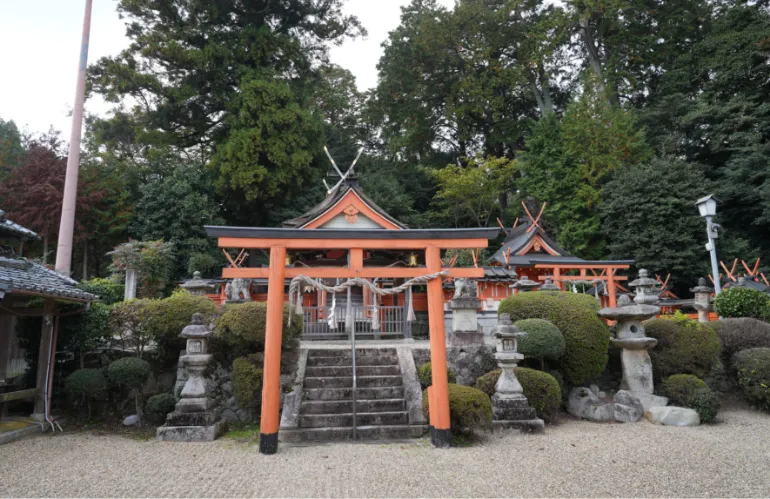
Nagao Jinja comprises a total of 12 shrine buildings. Their curved finials (chigi) and gabled roofs are characteristic of kasuga-zukuri, a style of architecture found at Kasuga Taisha Shrine, in central Nara. The inner sanctuary of Kasuga Taisha is rebuilt every 20 years, and following traditional practice, the old buildings are donated to nearby temples and shrines. The main shrine of Nagao Jinja is one such structure, believed to have been transferred here during the Momoyama period (1573–1603).
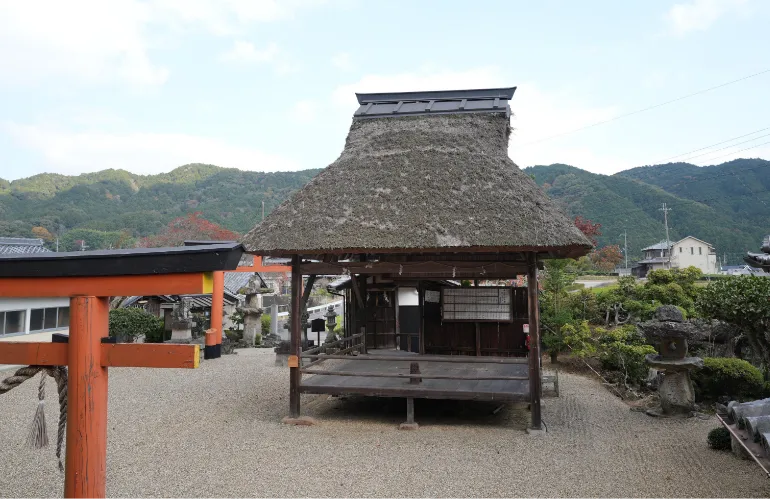
Near the entrance to Nagao Jinja is a covered stage that was once used for Noh theater. The Noh masks in the shrine’s collection were made in the Muromachi period (1392–1573) and have been worn by generations of performers. These masks were designated Important Cultural Properties in 1960, and they are now housed in the Nara Prefectural Museum of Art. Noh is no longer performed on the shrine’s covered stage, but the spirit of theater survives through music and sumo performances at the annual autumn festival. Actors dressed in loincloths portray sumo wrestlers who engage in comedic swordplay.
-
Niu Jinja Shrine
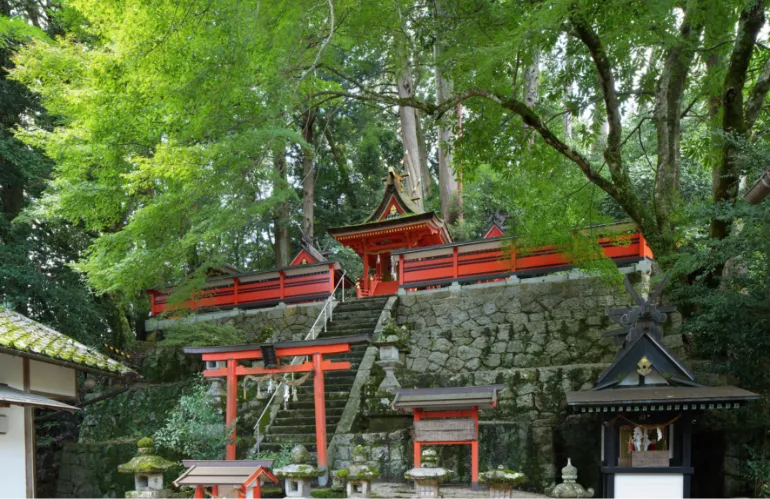
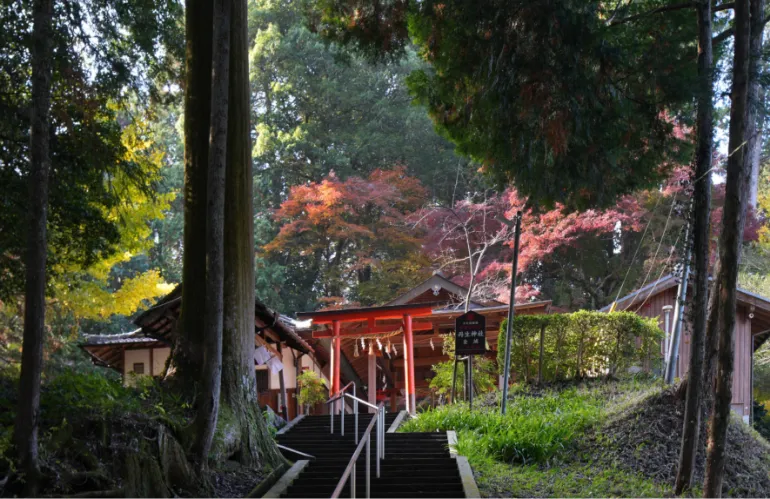
Niu Jinja is dedicated to Mizuhanome, a Shinto deity of water and agriculture. A shrine to Mizuhanome stands at the heart of the grounds alongside shrines to several other guardian deities. Only select shrine representatives and those who have taken part in a special purification ritual are permitted to climb the stairs to this sacred sanctuary.
The shrines’ distinctive roof ornaments show influence from the kasuga-zukuri style, which emulates the architecture of Kasuga Taisha Shrine, in central Nara. The curved finials (chigi) and step-canopy (kōhai) are unmistakable hallmarks of kasuga-zukuri, a reflection of Kasuga Taisha’s widespread cultural influence and religious authority.
The traditions of Niu Jinja also show the influence of the Shingon school of Buddhism, which was transmitted to Japan by the monk Kūkai (774–835). For example, in a local tradition called Mikka Jizō (literally, “three-day Jizō”), members of the community take turns looking after a statue of Jizō. In Shingon Buddhism, Jizō is one of the Thirteen Buddhas who assist devotees in this life and the afterlife.
For three days, a wooden cabinet enshrining Jizō is placed in front of the tokonoma alcove in the home, a seat traditionally reserved for the guest of honor. During this time, the family prays to Jizō, offering incense, flowers, and food. Once the three days have passed, the cabinet is strapped to the back of a family member who carries it to a neighbor’s house and announces that a guest has arrived. Although the origins of this practice are unknown, it continues to bring the community together.
-
Former Residence of the Chief Retainer of the Yagyū Domain
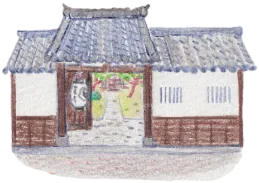
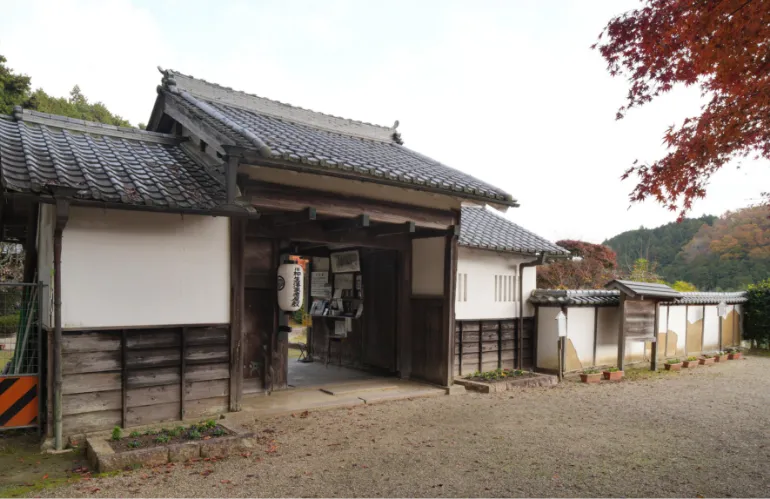
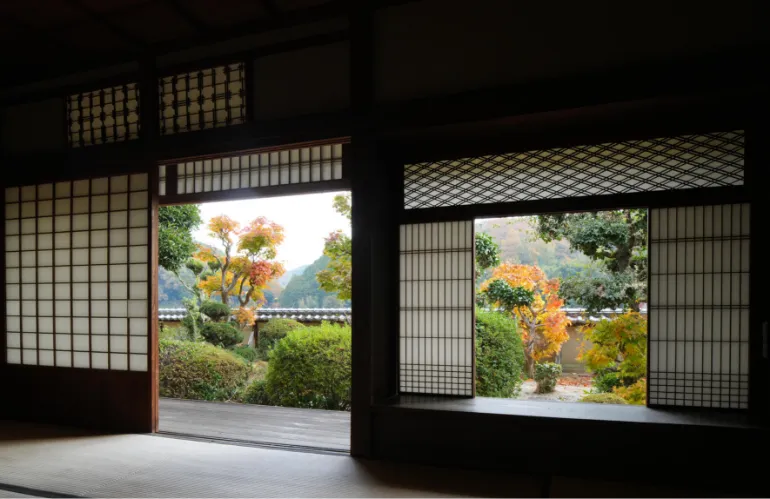
This grand residence was the home of Oyamada Shurei (1781–1856), a samurai from Iwashiro Province (now Fukushima Prefecture). At the age of 26, Shurei entered the service of the Yagyū domain, where he eventually rose to the post of chief retainer. Years of poor rice harvests had left the Yagyū family with significant debts, but Shurei brought the Yagyū out of debt by selling the family’s rice at the right time for the right price. When he retired at the age of 66, the Yagyū family gave him the land on which the residence now stands. The residence was completed in 1848, and Shurei began living here in 1850.
Many of the rooms display objects related to Shurei’s life and the Yagyū family’s history, from metal and bamboo swords (shinai) to assorted household items. The home’s traditional garden is over 200 years old and is said to reflect the sensibilities of the tea master Kizu Sōsen (1760–1858), with whom Shurei was closely acquainted.
In 1964, the residence was purchased by Yamaoka Sōhachi (1907–1978), an author known for his historical fiction. One of his representative works is Haru no sakamichi (Spring Slope), a novel about the great swordsman Yagyū Munenori (1571–1646). The house also displays materials related to this celebrated writer.
-
Ittōseki Split Boulder

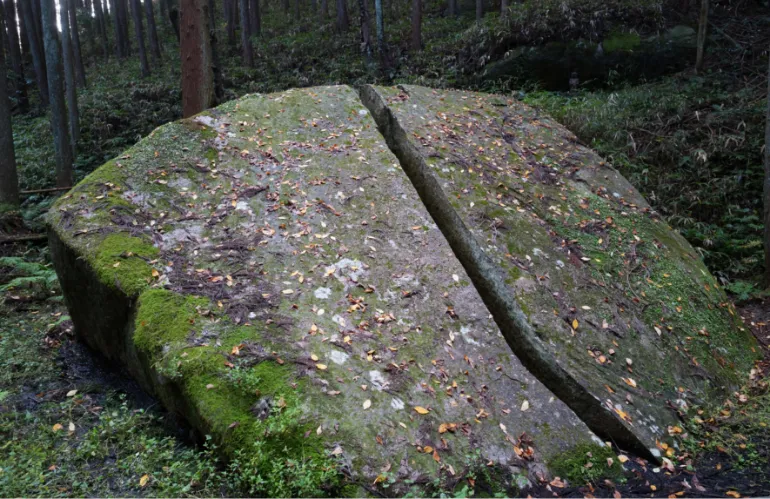
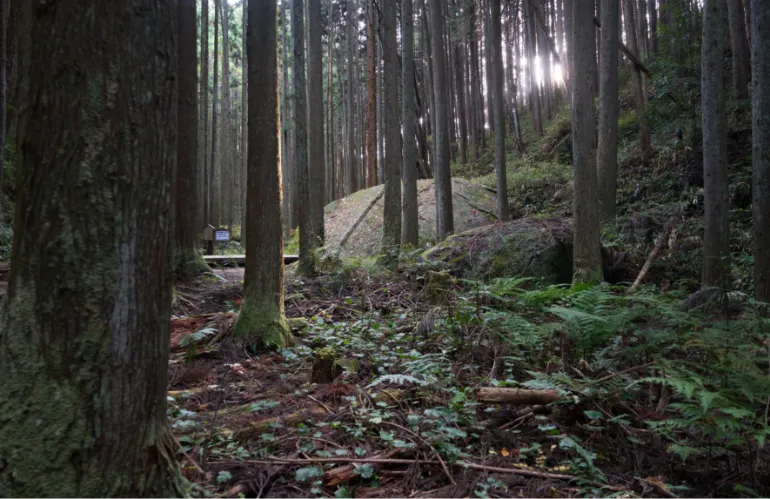
Around 700 meters from Hōtokuji Temple is a large boulder that is split cleanly in half. According to legend, it was cut by the famous swordsman Yagyū Muneyoshi (ca. 1527–1606) in a duel with a birdlike supernatural being called a tengu. The two fought fiercely throughout the night, but just as Muneyoshi brought down his sword to deal the finishing blow, the tengu disappeared. As dawn broke, Muneyoshi saw the boulder had been cleaved in two: it had received the attack in place of his elusive opponent.
The boulder’s location near Hōtokuji, in an area where Yagyū Shinkage-ryū practitioners historically trained, no doubt excited the imaginations of ambitious disciples and established the family legend. Indeed, the break is so flawless that it does look human-made. However, another possible explanation is that rainwater seeped into the boulder and then froze, expanding and neatly splitting the rock in two.
Today, the image of a powerful warrior slicing through a large boulder has been adopted into popular culture. The widely successful manga and anime Demon Slayer: Kimetsu no Yaiba features a similar story. Fans of this and other Yagyū-inspired media are welcome to visit the Ittōseki boulder, but they are asked to treat it with respect as it is part of Amano-Iwatate Jinja Shrine.