Byakugōji Temple
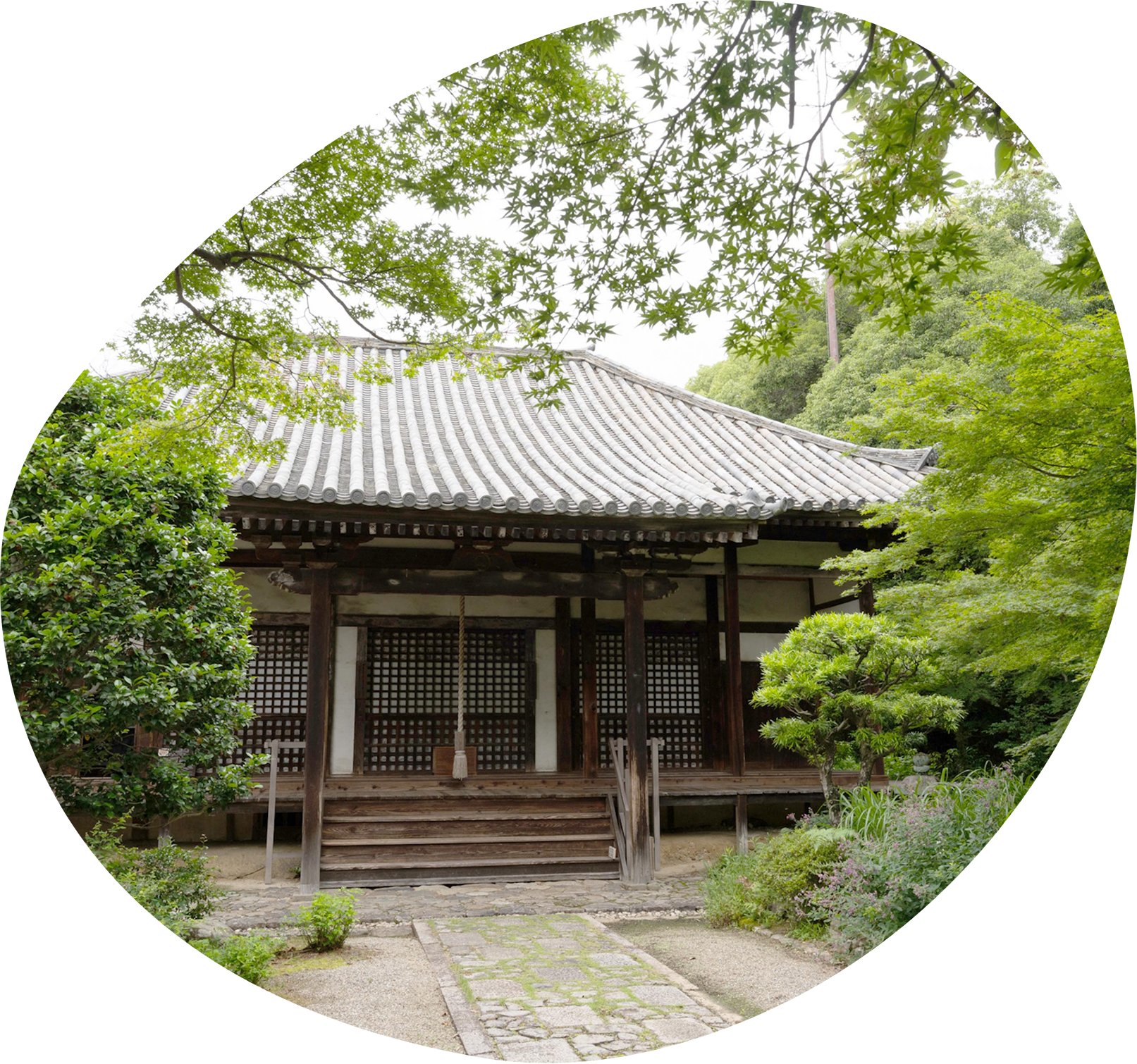


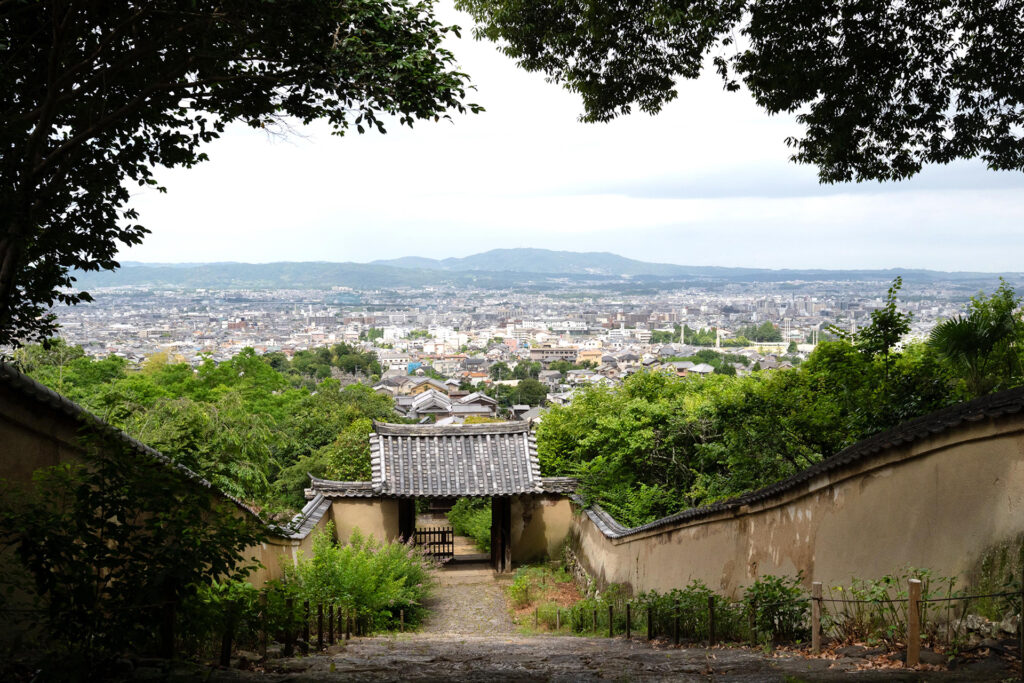
Every year on August 15th, Nara celebrates the Daimonji Okuribi fire ceremony which is held to commemorate those who died in war and disasters. At the foot of Mount Takamado - where the firebeds for the large dai character are located - stands Byakugōji Temple. From within the temple precincts, looking west, one gazes across a panoramic view of Nara city. It is said that this site was once the detached palace of Prince Shiki, the seventh son of Emperor Tenji. The temple buildings were restored during the Kamakura period by Eison. Eison’s disciple Dōshō brought back from Song dynasty China woodblock rubbings of the "Great Song Complete Buddhist Sutra". As the sutra were ceremonially read at this temple, it also became known as Issaikyōji (Temple of the Complete Sutras). The Issaikyō Buddhist service is held every year on April 8th, together with the Flower Festival. It is often said, “When Tōdaiji’s Omizutori festival ends, spring arrives,” though in connection with Byakugōji, people have long recited the saying: “Even after the cold has neared the end up to the equinox - the Issaikyō is yet to come.”
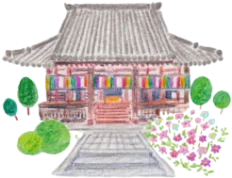
Byakugōji Temple overlooks the city of Nara from the foothills of Mt. Takamado. The temple is known for its panoramic views and lush scenery, as well as its substantial collection of Buddhist statuary from the late ninth to early seventeenth centuries.
Temple Origins
The temple’s name refers to the byakugō, a whorl of white hair said to have grown from the forehead of Shakyamuni Buddha. This distinguishing mark of the Buddha symbolizes enlightenment and is often represented by a dot or crystal. Byakugōji is believed to have been built on the grounds of a former imperial villa in the early Kamakura period (1185–1333), and it flourished under the prominent priest Eison (1201–1290).
Historic Treasures
Although Byakugōji was almost destroyed by warfare in the 1600s, several of its sacred Buddhist images were preserved. These statues are now publicly displayed in the temple’s Treasure Hall.
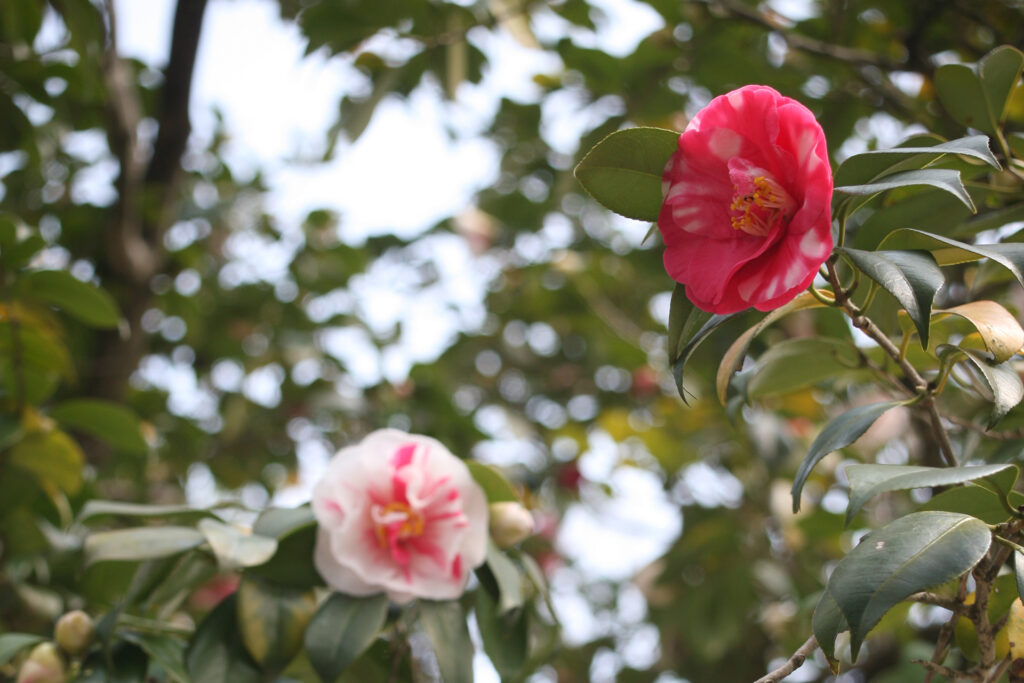
In spring, the temple’s 450-year-old camellia tree is covered with tricolor blossoms in various combinations of red, white, and pink. In autumn, the temple grounds are adorned with the white and pinkish-purple flowers of bush clover.
Highlights
-
Seated Statue of Amida Buddha
Late Heian to early Kamakura periods (ca. 1100–1200)
Byakugōji Temple’s principal image is a statue of Amida Buddha, the central deity of Pure Land Buddhism. Amida is believed to offer salvation after death by welcoming all those who invoke the deity’s name into the Pure Land, a heavenlike realm.
This seated statue of Amida Buddha is carved from Japanese cypress and coated with lacquer. It is admired for its symmetry and attention to detail, such as the intricate curls of hair that cover its head. The jewel at the front of the topknot (nikkeishu) and the whorl of hair on the forehead (byakugō) are both made of crystal. The gaze is directed downward, eyes half-closed, and the facial expression is gentle and serene. The center of the openwork mandorla behind the statue has a smaller image of Amida seated on a lotus pedestal and flanked by celestial beings.
The shallow carving of the body and robes give the statue a lithe, delicate appearance characteristic of sculpture in the late Heian period (794–1185). This is a marked contrast to the robust, more realistic style of the Kamakura period (1185–1333).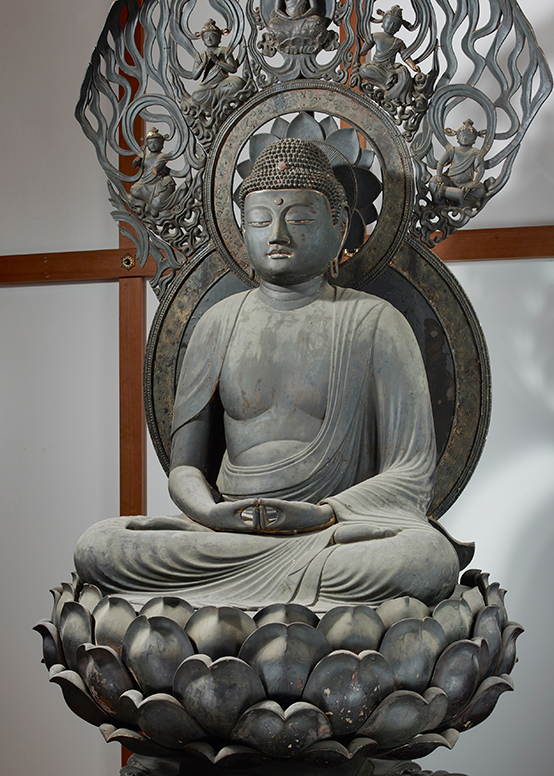
Late Heian to early Kamakura periods (ca. 1100–1200)
Byakugōji Temple’s principal image is a statue of Amida Buddha, the central deity of Pure Land Buddhism. Amida is believed to offer salvation after death by welcoming all those who invoke the deity’s name into the Pure Land, a heavenlike realm.
This seated statue of Amida Buddha is carved from Japanese cypress and coated with lacquer. It is admired for its symmetry and attention to detail, such as the intricate curls of hair that cover its head. The jewel at the front of the topknot (nikkeishu) and the whorl of hair on the forehead (byakugō) are both made of crystal. The gaze is directed downward, eyes half-closed, and the facial expression is gentle and serene. The center of the openwork mandorla behind the statue has a smaller image of Amida seated on a lotus pedestal and flanked by celestial beings.
The shallow carving of the body and robes give the statue a lithe, delicate appearance characteristic of sculpture in the late Heian period (794–1185). This is a marked contrast to the robust, more realistic style of the Kamakura period (1185–1333). -
Statue of a Bodhisattva
Heian period (794–1185)
This statue’s broad chest and forehead, full body, and well-proportioned composition are characteristic of Buddhist statuary made between the ninth and tenth centuries. It is believed to depict Monju, the bodhisattva of wisdom. Buddhist deities can typically be identified by their hands, which form symbolic gestures called mudras. Both of this statue’s hands are later restorations, however, and may not represent the statue’s original appearance. The right hand forms a fist, which signifies the elimination of evil, and the left holds a lotus flower, a symbol of purity and enlightenment.
Like all bodhisattvas, Monju chose to delay entrance into nirvana and help others attain enlightenment. The large bump atop the head symbolizes accumulated wisdom, and the crystal embedded in the forehead represents the byakugō, a whorl of hair said to illuminate the world. With eyes cast slightly downward, Monju’s expression is gentle. The celestial robe delicately draped over the shoulders and wrists onto the knees shows the precision of a skilled carver.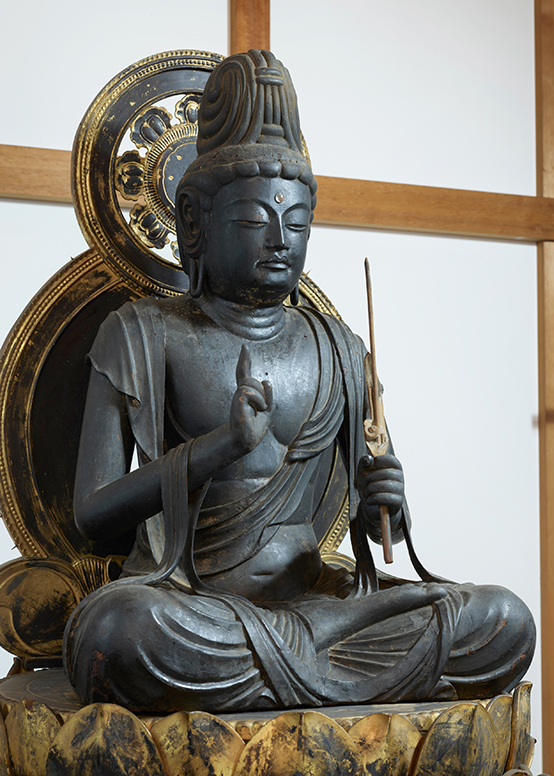
Heian period (794–1185)
This statue’s broad chest and forehead, full body, and well-proportioned composition are characteristic of Buddhist statuary made between the ninth and tenth centuries. It is believed to depict Monju, the bodhisattva of wisdom. Buddhist deities can typically be identified by their hands, which form symbolic gestures called mudras. Both of this statue’s hands are later restorations, however, and may not represent the statue’s original appearance. The right hand forms a fist, which signifies the elimination of evil, and the left holds a lotus flower, a symbol of purity and enlightenment.
Like all bodhisattvas, Monju chose to delay entrance into nirvana and help others attain enlightenment. The large bump atop the head symbolizes accumulated wisdom, and the crystal embedded in the forehead represents the byakugō, a whorl of hair said to illuminate the world. With eyes cast slightly downward, Monju’s expression is gentle. The celestial robe delicately draped over the shoulders and wrists onto the knees shows the precision of a skilled carver. -
Statue of King EnmaImportant Cultural Property
Kamakura period (1185–1333)
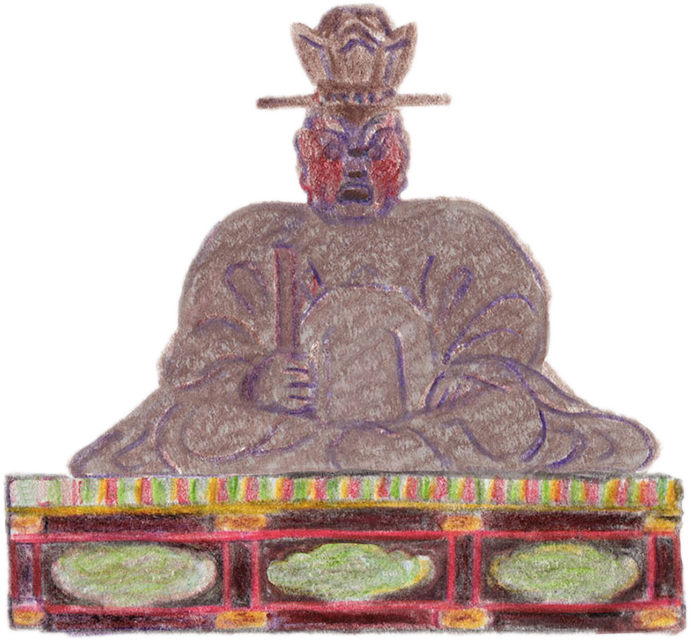
This fearsome statue of King Enma is the most widely known image at Byakugōji Temple. King Enma is one of the Ten Judges of Hell, who put the deceased on trial and decide which of the six Buddhist realms they will be reborn into. Those who succumb to greed are said to be reborn as hungry ghosts and condemned to endless starvation. Those who live virtuously are said to be reborn as humans, who have a better chance to accrue positive karma and escape the cycle of rebirth.
On the 35th day after death, the deceased is brought to King Enma’s court to face their fifth trial. King Enma reviews an extensive record of the deceased’s life and considers the verdicts of the previous four trials before selecting one of the six realms. He is therefore the most famous—and feared—of the Ten Judges of Hell.
This statue depicts King Enma with flashing eyes, his face twisted in wrath as though warning temple-goers of the judgment that awaits them after death. He is flanked by two attendants: a reader, who announces the deeds of the deceased, and a scribe, who records their sins. All three statues were once painted in bright colors, which added to their fearsome appearance.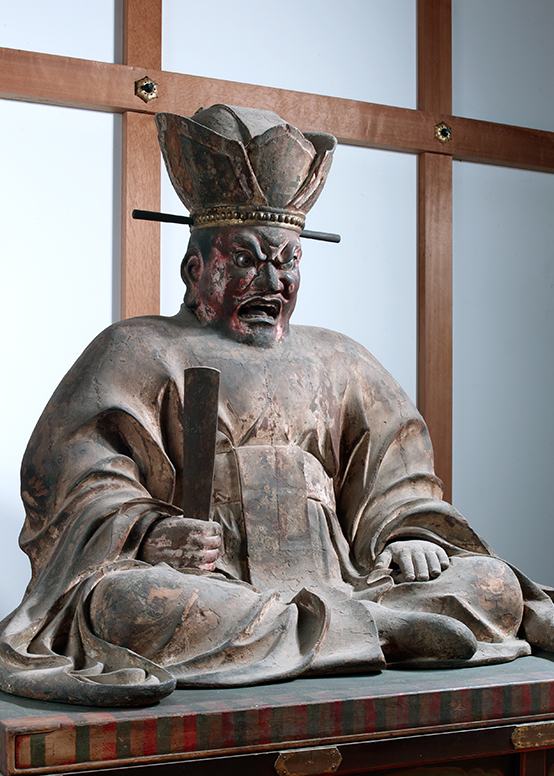
Kamakura period (1185–1333)
This fearsome statue of King Enma is the most widely known image at Byakugōji Temple. King Enma is one of the Ten Judges of Hell, who put the deceased on trial and decide which of the six Buddhist realms they will be reborn into. Those who succumb to greed are said to be reborn as hungry ghosts and condemned to endless starvation. Those who live virtuously are said to be reborn as humans, who have a better chance to accrue positive karma and escape the cycle of rebirth.
On the 35th day after death, the deceased is brought to King Enma’s court to face their fifth trial. King Enma reviews an extensive record of the deceased’s life and considers the verdicts of the previous four trials before selecting one of the six realms. He is therefore the most famous—and feared—of the Ten Judges of Hell.
This statue depicts King Enma with flashing eyes, his face twisted in wrath as though warning temple-goers of the judgment that awaits them after death. He is flanked by two attendants: a reader, who announces the deeds of the deceased, and a scribe, who records their sins. All three statues were once painted in bright colors, which added to their fearsome appearance. -
Statue of JizōImportant Cultural Property
Kamakura period (1185–1333)
This statue depicts the bodhisattva Jizō, one of Japan’s most beloved Buddhist deities. Jizō is believed to protect travelers and children, and statues of Jizō are often erected along roads and in graveyards.
In the courts of the Ten Judges of Hell, Jizō intervenes on behalf of the deceased and testifies to their good deeds. For those who have already fallen into hell, Jizō is said to work tirelessly to shorten their sentences and rescue them from torment.
Here, Jizō is depicted standing on a lotus flower, holding the pilgrim’s staff used to force open the gates of hell and, in the opposite hand, a wish-fulfilling jewel to light up the darkness. The statue’s eyes and the whorl of hair (byakugō) between its brows are both made of crystal. The relatively shallow carving of the body and the elaborate, evenly spaced pleats of the robes are characteristic of Buddhist statuary from the mid-thirteenth century.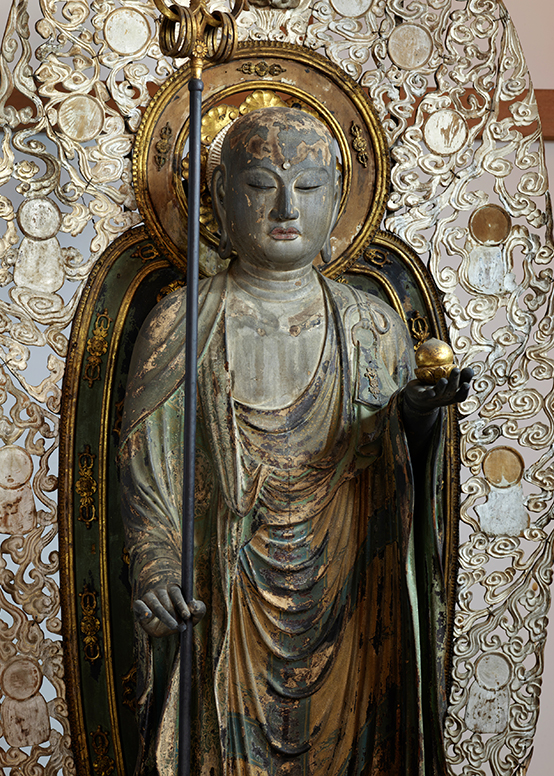
Kamakura period (1185–1333)
This statue depicts the bodhisattva Jizō, one of Japan’s most beloved Buddhist deities. Jizō is believed to protect travelers and children, and statues of Jizō are often erected along roads and in graveyards.
In the courts of the Ten Judges of Hell, Jizō intervenes on behalf of the deceased and testifies to their good deeds. For those who have already fallen into hell, Jizō is said to work tirelessly to shorten their sentences and rescue them from torment.
Here, Jizō is depicted standing on a lotus flower, holding the pilgrim’s staff used to force open the gates of hell and, in the opposite hand, a wish-fulfilling jewel to light up the darkness. The statue’s eyes and the whorl of hair (byakugō) between its brows are both made of crystal. The relatively shallow carving of the body and the elaborate, evenly spaced pleats of the robes are characteristic of Buddhist statuary from the mid-thirteenth century. -
Statue of Kōshō (Eison)Important Cultural Property
Kamakura period (1185–1333)
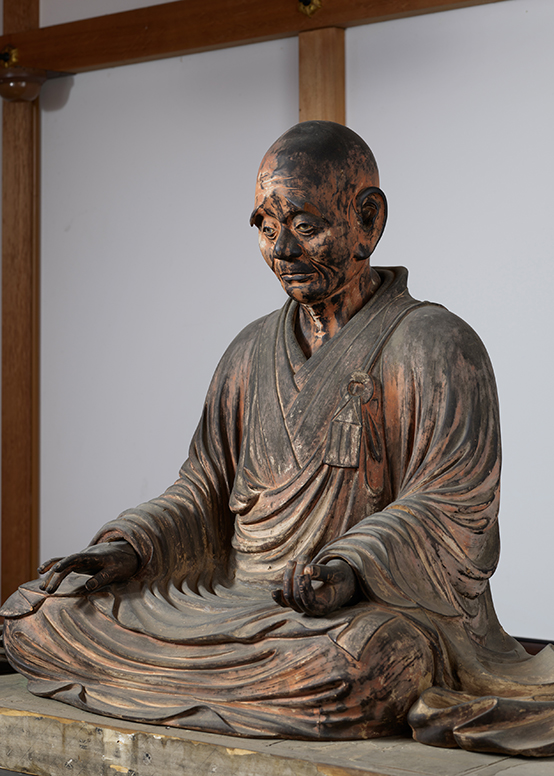
Eison (1201–1290), known also as the bodhisattva Kōshō, was a Buddhist priest who significantly contributed to the prosperity of Byakugōji Temple. Eison’s lifelong dedication to assisting the poor and reviving abandoned temples led to his posthumous recognition as a bodhisattva, one who delays their entrance into nirvana to help others attain enlightenment.
Eison was involved in all corners of society and was favored by the imperial court and lower classes alike. He helped care for leprosy patients, who faced severe persecution, feeding and bathing them with the help of his disciples. In an era when many religious institutions neglected members of the lower classes, Eison treated vulnerable members of society with benevolence and care.
This statue is a copy of one carved for Saidaiji Temple, in central Nara, that depicts Eison as an old man. His head is somewhat pointed, and his eyebrows droop slightly. The statue’s eyes are made of inlaid crystal, and like other statues in Byakugōji’s Treasure Hall, it was once painted in bright colors.
Kamakura period (1185–1333)
Eison (1201–1290), known also as the bodhisattva Kōshō, was a Buddhist priest who significantly contributed to the prosperity of Byakugōji Temple. Eison’s lifelong dedication to assisting the poor and reviving abandoned temples led to his posthumous recognition as a bodhisattva, one who delays their entrance into nirvana to help others attain enlightenment.
Eison was involved in all corners of society and was favored by the imperial court and lower classes alike. He helped care for leprosy patients, who faced severe persecution, feeding and bathing them with the help of his disciples. In an era when many religious institutions neglected members of the lower classes, Eison treated vulnerable members of society with benevolence and care.
This statue is a copy of one carved for Saidaiji Temple, in central Nara, that depicts Eison as an old man. His head is somewhat pointed, and his eyebrows droop slightly. The statue’s eyes are made of inlaid crystal, and like other statues in Byakugōji’s Treasure Hall, it was once painted in bright colors.
-
Statue of King TaizanImportant Cultural Property
Kamakura period (1185–1333)
This statue depicts King Taizan, one of the Ten Judges of Hell. He is the seventh and final judge in the series of trials said to be held in the 49 days after death. Prayers and offerings made on behalf of the deceased affect the outcome of the trial, and a lack of offerings will lead to a harsher punishment. King Taizan examines the offerings and reviews the verdicts of six previous trials before determining the conditions of rebirth, including one’s sex and lifespan.
The statue of King Taizan is thought to form a set with the statue of King Enma. An ink inscription inside the statue reveals it was carved in 1259 by Kōen (b. 1207), a member of the prominent Kei school of Buddhist art. The statue was badly damaged by a fire in 1497 but was repaired the following year. Its simplified yet realistic portrayal of King Taizan is characteristic of Kōen’s style. Made from Japanese cypress, the statue displays advanced decorative techniques, including inlaid crystal eyes and intricate patterns on the robes.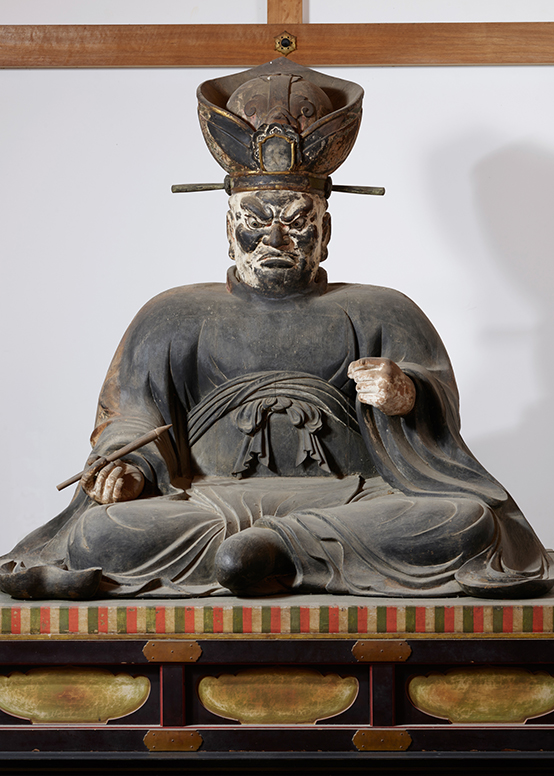
Kamakura period (1185–1333)
This statue depicts King Taizan, one of the Ten Judges of Hell. He is the seventh and final judge in the series of trials said to be held in the 49 days after death. Prayers and offerings made on behalf of the deceased affect the outcome of the trial, and a lack of offerings will lead to a harsher punishment. King Taizan examines the offerings and reviews the verdicts of six previous trials before determining the conditions of rebirth, including one’s sex and lifespan.
The statue of King Taizan is thought to form a set with the statue of King Enma. An ink inscription inside the statue reveals it was carved in 1259 by Kōen (b. 1207), a member of the prominent Kei school of Buddhist art. The statue was badly damaged by a fire in 1497 but was repaired the following year. Its simplified yet realistic portrayal of King Taizan is characteristic of Kōen’s style. Made from Japanese cypress, the statue displays advanced decorative techniques, including inlaid crystal eyes and intricate patterns on the robes. -
Statues of the Amida Raigō Triad
Amida: Muromachi period (1392–1573)
Kannon and Seishi: Edo period (1603–1867)
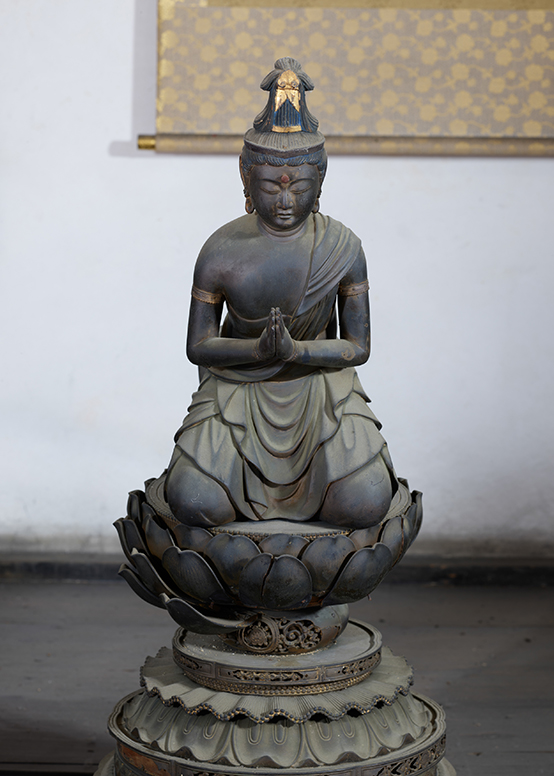
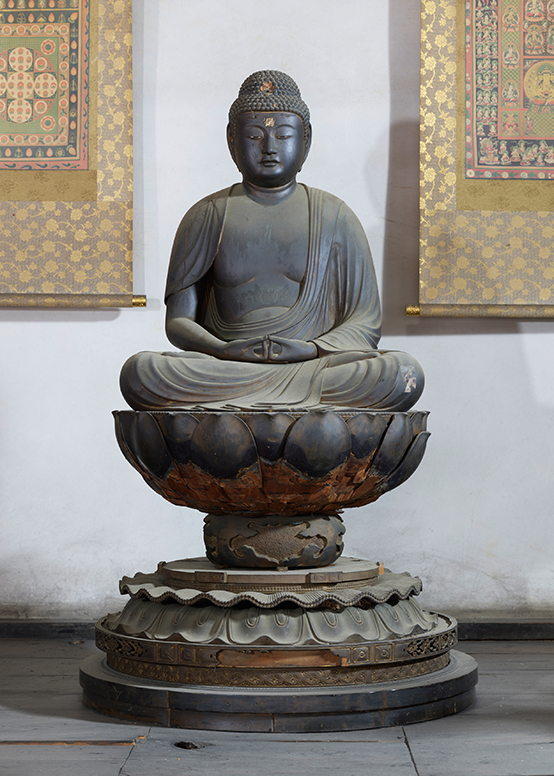
This is an example of an Amida raigō triad, a popular arrangement in Buddhist iconography. The central statue depicts Amida Buddha, who presides over the heavenlike Pure Land. Amida is descending from the Pure Land to greet (raigō) the recently departed and escort them to paradise. Amida is accompanied by two attendants: Kannon, the bodhisattva of compassion, and Seishi, the bodhisattva of wisdom and strength.
The statue of Amida dates to the Muromachi period (1392–1573), but the attendants were carved much later. Amida is seated with a gentle expression on a youthful face. Seishi kneels on the right, hands pressed together in prayer, and Kannon is on the left, holding a lotus pedestal on which to carry the deceased. Both bodhisattvas are leaning slightly forward, as though preparing to stand, and Kannon has one foot already on the ground. This expression of movement symbolizes the triad escorting worshippers to the Pure Land.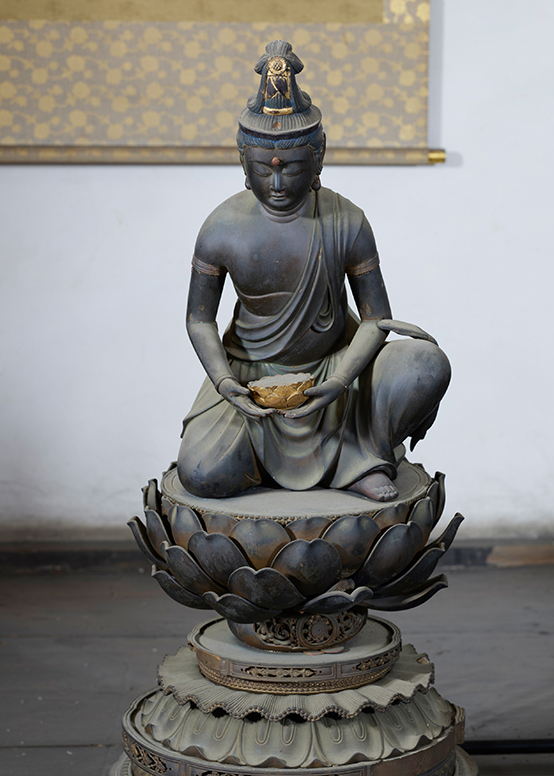
Amida: Muromachi period (1392–1573)
Kannon and Seishi: Edo period (1603–1867)
This is an example of an Amida raigō triad, a popular arrangement in Buddhist iconography. The central statue depicts Amida Buddha, who presides over the heavenlike Pure Land. Amida is descending from the Pure Land to greet (raigō) the recently departed and escort them to paradise. Amida is accompanied by two attendants: Kannon, the bodhisattva of compassion, and Seishi, the bodhisattva of wisdom and strength.
The statue of Amida dates to the Muromachi period (1392–1573), but the attendants were carved much later. Amida is seated with a gentle expression on a youthful face. Seishi kneels on the right, hands pressed together in prayer, and Kannon is on the left, holding a lotus pedestal on which to carry the deceased. Both bodhisattvas are leaning slightly forward, as though preparing to stand, and Kannon has one foot already on the ground. This expression of movement symbolizes the triad escorting worshippers to the Pure Land.