Hannyaji Temple
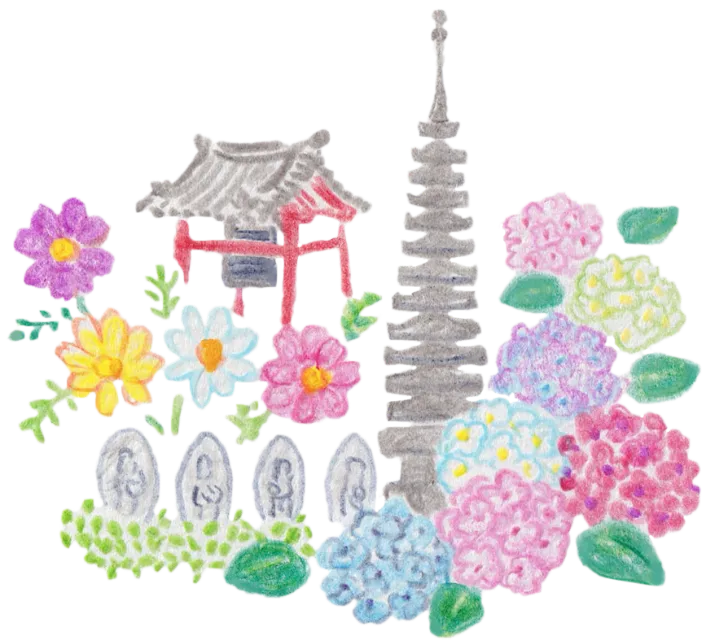
During the Nara period, Hannyaji prospered as the guardian temple of the kimon - the north-eastern quarter believed to be vulnerable to ill fortune - protecting Heijō-kyō, and serving as a lively crossroads for scholarly monks. By the end of the Heian period, the temple’s fortunes turned. The Genpei War swept through the region, and Hannyaji’s location at the gateway from Kyoto to Nara made it the first target; it was set ablaze and suffered devastating losses.
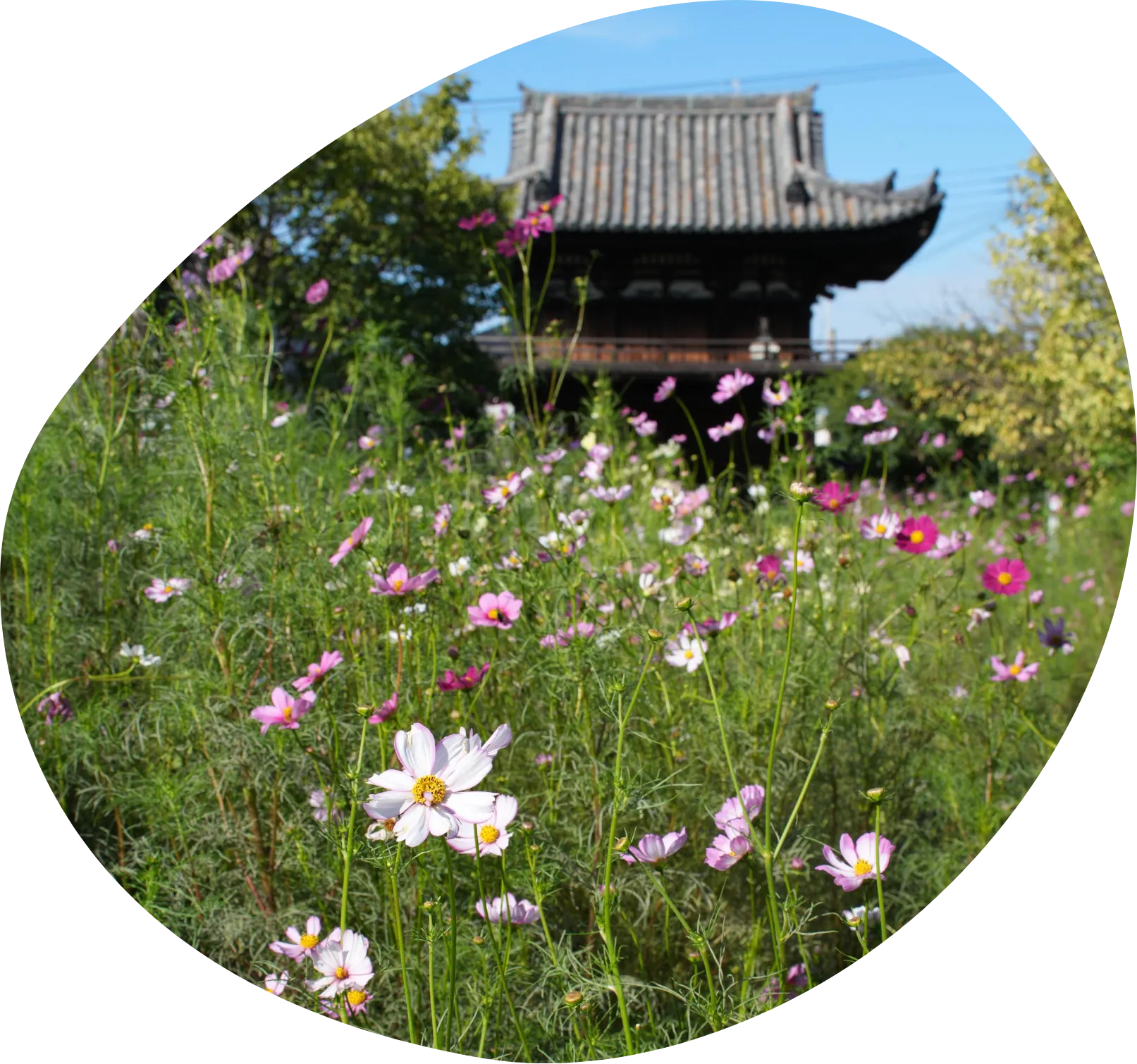
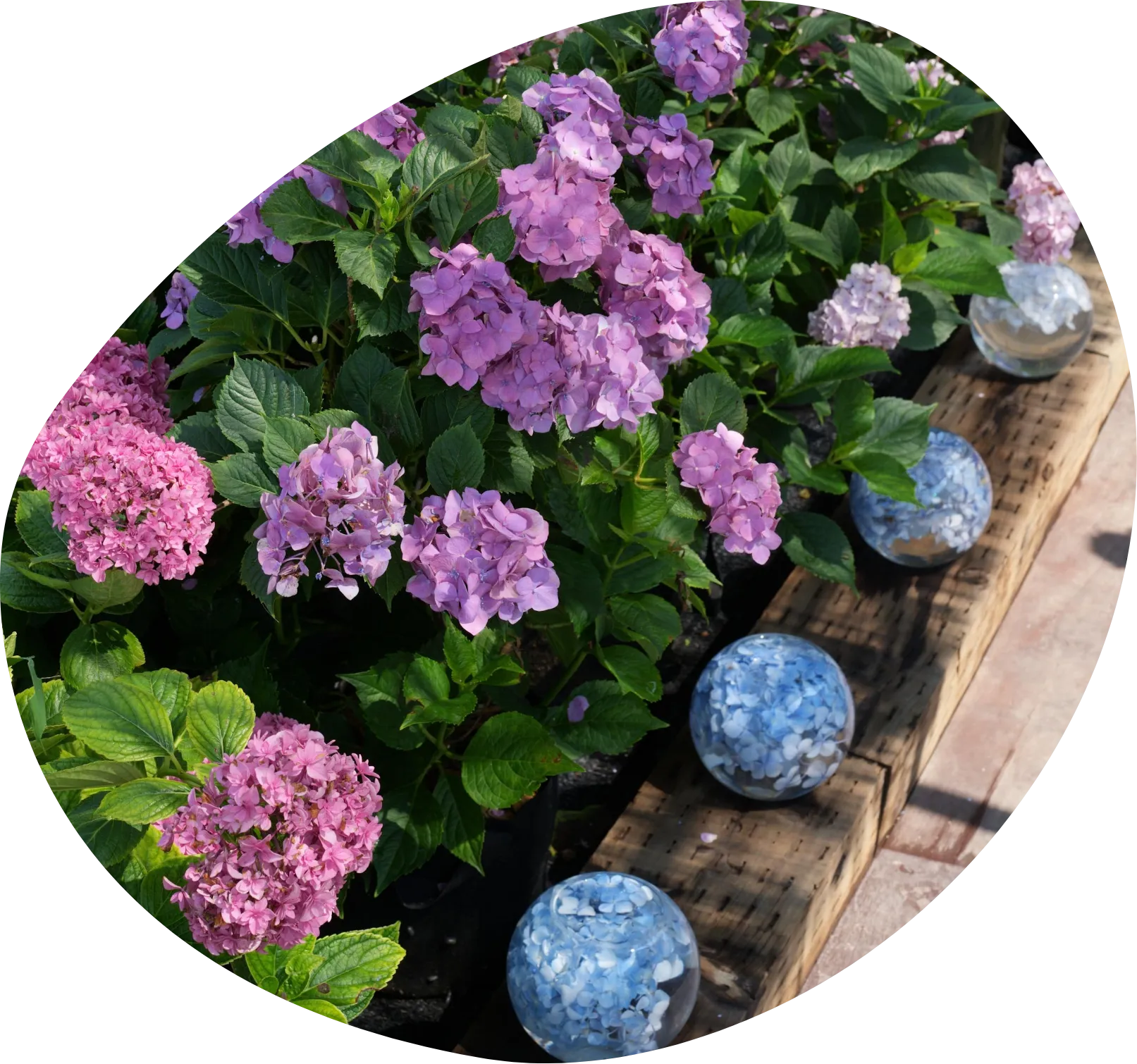
Revival came during the Kamakura period, led by the devoted monks Eison and Ninshō, renowned for their tireless work aiding society’s most vulnerable. Yet decline returned once more. After the war, Hannyaji found a new chapter, reborn as a temple famed for its fields of cosmos flowers, drawing visitors in great numbers. In recent years, the temple grounds have grown richer still: hydrangeas bloom in early summer and daffodils add colour to the winter months. As the flowers sway in the breeze, Hannyaji invites us to linger - to admire the blooms, though also to reflect on its long history of destruction and renewal.
Rising From the Ashes
Hannyaji Temple is believed to have been established in 629 by the Buddhist monk Ekan (Kr. Hyegwan). In the thousand years since its founding, the temple has survived the fires of war to uphold its principles of universal knowledge and learning.
When Nara became Japan’s capital in 710, Hannyaji assumed a role as protector of the city from the demons and maladies traditionally believed to come from the unlucky northeastern direction. The temple flourished as a center of learning until Nara came under siege on January 15, 1181, by the Taira clan, who were engaged in a power struggle with the rival Minamoto clan. In a single day, most of Nara’s temples were destroyed, and over 3,000 people were killed.
Hannyaji was later revived through the efforts of a monk whose name has since been lost to time. Mourning the loss of the once great temple, this monk commissioned the Thirteen-Tier Stone Stupa that still stands on the grounds today. Although he did not live to see the completion of the stupa, his endeavors served as the catalyst for Hannyaji’s transformation from ruins into a thriving temple complex within a century.
Wisdom, Faith, and Charity
Hannyaji is a temple of the Ritsu sect of Shingon Buddhism. Its central figure is Monju, the bodhisattva of transcendent wisdom (hannya). In Buddhism, transcendent wisdom refers to the ability to view the world without bias and recognize its true nature. Monju was believed to test the depth of people’s compassion by appearing before them as a beggar or invalid. These vulnerable members of society were understood to be the embodiment of Monju, and they were warmly welcomed at Hannyaji.
Hannyaji later became a haven for people affected by leprosy, who were given shelter and treatment at nearby infirmaries. Sick people were considered “impure” and generally barred from sacred spaces, and Hannyaji’s decision to welcome them was controversial. In fact, surviving records reveal that other religious institutions in Nara responded to Hannyaji’s openness with confusion and disbelief.
Laypeople and the lower classes were also welcome at Hannyaji, and the monks regularly organized public sermons. One historical account describes how Hannyaji’s monks gathered a crowd of 2,000 people, provided them with rice, cloth, cooking pots, and even straw hats for shade, and then delivered a lecture on Monju’s teachings.
Hannyaji Today
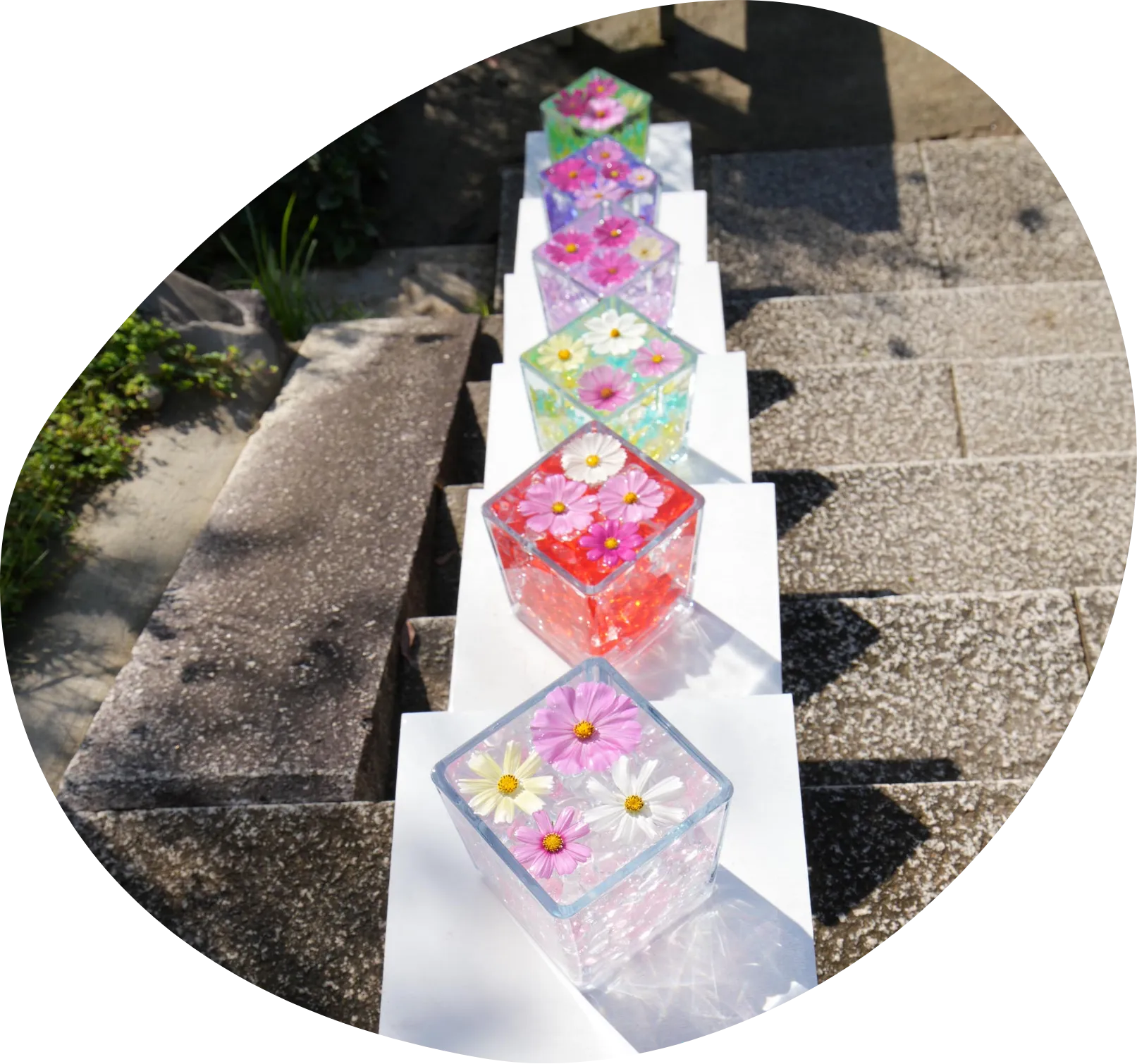
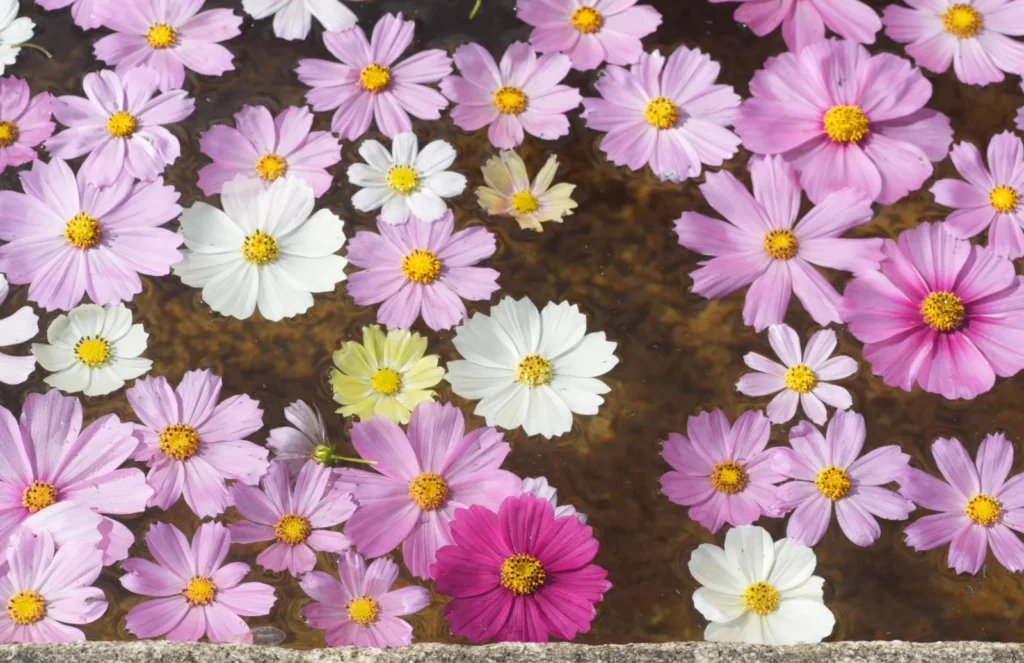
It is difficult to imagine that crowds in the thousands once gathered within Hannyaji’s quiet grounds. Today, Hannyaji is popular among students, who petition Monju for good grades and success on entrance exams. Hannyaji is also known as the “Cosmos Temple,” so named for the approximately 150,000 cosmos flowers that blanket its grounds in clusters of pink every autumn. Many visitors come throughout the year to see beautiful arrangements of seasonal flowers made by the head priest.
Highlights
-
Main Hall
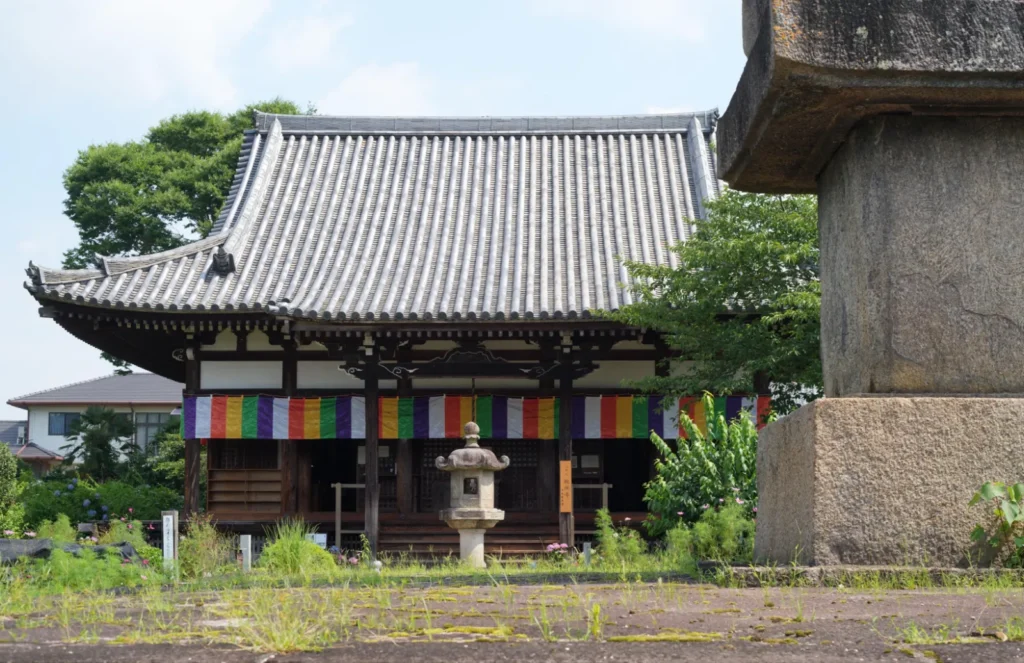
Hannyaji’s Main Hall was rebuilt in 1667 during the Kanbun era through the fundraising efforts of Myōjakuin Kōnin and Myōkōin Kōei. Inscriptions on the onigawara (ridge-end demon tiles) of the great roof beam bear the dates of the same era, and an inscription on the ceiling records 1704. From this, it is believed that reconstruction began early in the Kanbun era and was completed only after several decades of sustained work. The year when the ridgepole was raised, marked exactly one hundred years since the earlier Monju Kondō (Monju Golden Hall) had been destroyed by fire. Compared with that Kamakura-period hall, which had been rebuilt on a grand scale, the present structure is considerably smaller. Even so, it preserves many elements of older architectural styles. Within the inner sanctuary stands an altar platform, upon which rests a Kasuga-style miniature shrine enshrining the principal image, Monju Bosatsu (Mañjuśrī). The ceiling of the hall is of the coffered 'gōtenjō' type, while the area directly above the altar features a raised coffered ceiling, adding emphasis to the sacred space.
The principal statue of Monju Bosatsu dates to 1324. It was commissioned by the eminent monk Monkanbō Kōshin in fulfilment of a vow made for Emperor Go-Daigo. Originally, it was kept as a hidden principal image within the sutra repository. In the earlier Monju Kondō stood a colossal Jōroku-sized statue of Monju Bosatsu seated upon a lion, created in 1267. This great image was later lost to fire. A fragment of the lotus pedestal stone of granite, upon which the lion once stood, now rests along the veranda of the present hall, offering a tangible hint of the immense scale the statue must once have possessed.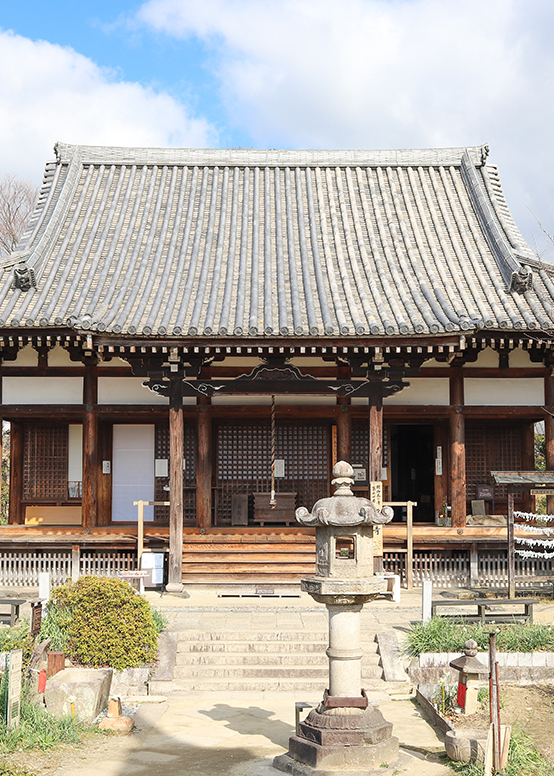
Hannyaji’s Main Hall was rebuilt in 1667 during the Kanbun era through the fundraising efforts of Myōjakuin Kōnin and Myōkōin Kōei. Inscriptions on the onigawara (ridge-end demon tiles) of the great roof beam bear the dates of the same era, and an inscription on the ceiling records 1704. From this, it is believed that reconstruction began early in the Kanbun era and was completed only after several decades of sustained work. The year when the ridgepole was raised, marked exactly one hundred years since the earlier Monju Kondō (Monju Golden Hall) had been destroyed by fire. Compared with that Kamakura-period hall, which had been rebuilt on a grand scale, the present structure is considerably smaller. Even so, it preserves many elements of older architectural styles. Within the inner sanctuary stands an altar platform, upon which rests a Kasuga-style miniature shrine enshrining the principal image, Monju Bosatsu (Mañjuśrī). The ceiling of the hall is of the coffered 'gōtenjō' type, while the area directly above the altar features a raised coffered ceiling, adding emphasis to the sacred space.
The principal statue of Monju Bosatsu dates to 1324. It was commissioned by the eminent monk Monkanbō Kōshin in fulfilment of a vow made for Emperor Go-Daigo. Originally, it was kept as a hidden principal image within the sutra repository. In the earlier Monju Kondō stood a colossal Jōroku-sized statue of Monju Bosatsu seated upon a lion, created in 1267. This great image was later lost to fire. A fragment of the lotus pedestal stone of granite, upon which the lion once stood, now rests along the veranda of the present hall, offering a tangible hint of the immense scale the statue must once have possessed. -
Rōmon GateNational Treasure
This is Japan’s oldest example of a rōmon, a tall gate with a false second story. It dates to the Kamakura period (1185–1333) and originally served as the temple’s west gate. Today, it is the only remaining gate at Hannyaji Temple.
The gate is a striking example of Daibutsuyō (literally, “Great Buddha style”) architecture, the style named for its use in the reconstruction of the Great Buddha Hall of Tōdaiji Temple, in central Nara. Although the heyday of Daibutsuyō architecture was brief, the beauty of its deliberate roughness greatly influenced other architectural styles. For example, the gate’s structural elements, such as its brackets, rafters, and penetrating tie beams, are left exposed. In fact, even the roof’s support beams are visible when looking up from inside the gate. This inclination to treat exposed structural elements as an aesthetic feature, rather than as something to be hidden behind finishes, has since become a common feature of traditional Japanese architecture.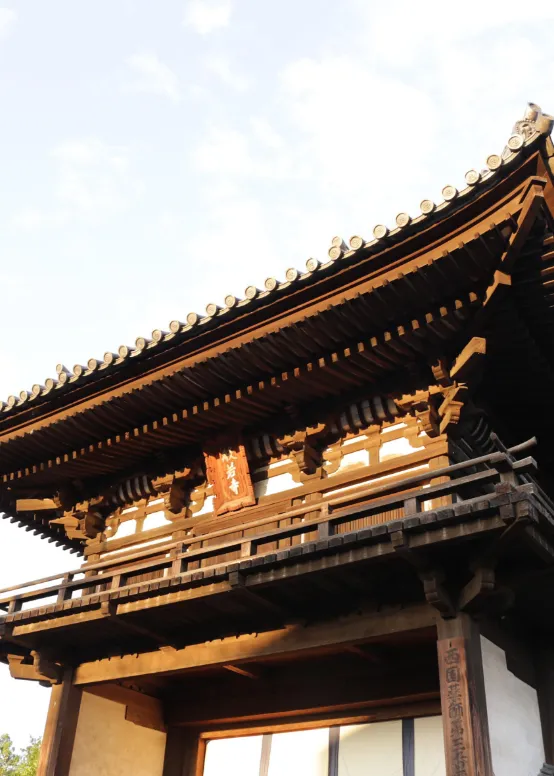
This is Japan’s oldest example of a rōmon, a tall gate with a false second story. It dates to the Kamakura period (1185–1333) and originally served as the temple’s west gate. Today, it is the only remaining gate at Hannyaji Temple.
The gate is a striking example of Daibutsuyō (literally, “Great Buddha style”) architecture, the style named for its use in the reconstruction of the Great Buddha Hall of Tōdaiji Temple, in central Nara. Although the heyday of Daibutsuyō architecture was brief, the beauty of its deliberate roughness greatly influenced other architectural styles. For example, the gate’s structural elements, such as its brackets, rafters, and penetrating tie beams, are left exposed. In fact, even the roof’s support beams are visible when looking up from inside the gate. This inclination to treat exposed structural elements as an aesthetic feature, rather than as something to be hidden behind finishes, has since become a common feature of traditional Japanese architecture. -
Sutra RepositoryImportant Cultural Property
This modest building has stood on the grounds of Hannyaji Temple since at least the late Kamakura period (1185–1333), when it was made into a repository for sacred Buddhist texts (sutras). It is mentioned in a well-known episode from the Taiheiki (literally, “Chronicle of Great Peace”), a fourteenth-century epic detailing the rise and fall of Emperor Go-Daigo (1288–1339).
The episode recounts how Go-Daigo’s son Prince Moriyoshi (1308–1335) evaded his death by taking refuge here during the Genkō War (1331–1333), a conflict between the emperor and the Kamakura shogunate. Inside the repository, Moriyoshi found that one of the three large sutra chests had been left open. He buried himself among the scrolls inside just before his pursuers burst into the building. They broke open and rummaged through the closed chests but left without checking the open one. Moriyoshi remained cautious and quickly moved to one of the ransacked chests. Moments later, his enemies returned to investigate the open chest. Having found nothing, they had no choice but to give up their search, and Moriyoshi narrowly escaped death.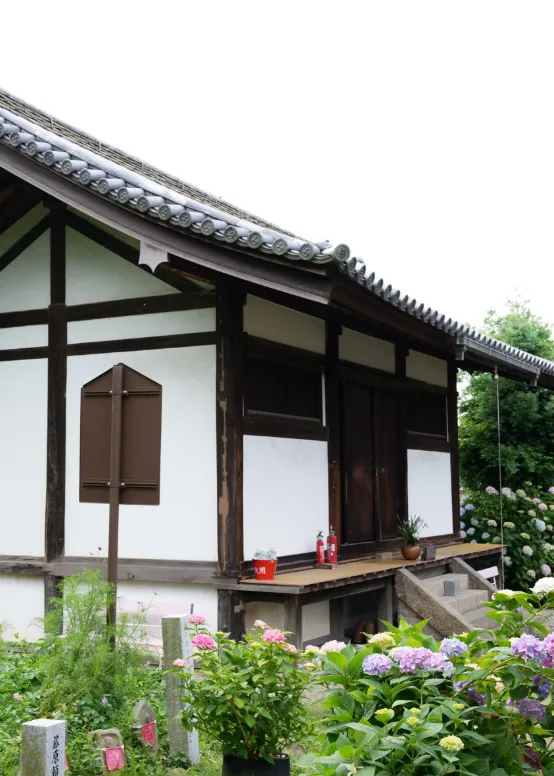
This modest building has stood on the grounds of Hannyaji Temple since at least the late Kamakura period (1185–1333), when it was made into a repository for sacred Buddhist texts (sutras). It is mentioned in a well-known episode from the Taiheiki (literally, “Chronicle of Great Peace”), a fourteenth-century epic detailing the rise and fall of Emperor Go-Daigo (1288–1339).
The episode recounts how Go-Daigo’s son Prince Moriyoshi (1308–1335) evaded his death by taking refuge here during the Genkō War (1331–1333), a conflict between the emperor and the Kamakura shogunate. Inside the repository, Moriyoshi found that one of the three large sutra chests had been left open. He buried himself among the scrolls inside just before his pursuers burst into the building. They broke open and rummaged through the closed chests but left without checking the open one. Moriyoshi remained cautious and quickly moved to one of the ransacked chests. Moments later, his enemies returned to investigate the open chest. Having found nothing, they had no choice but to give up their search, and Moriyoshi narrowly escaped death. -
Thirteen-Tier Stone StupaImportant Cultural Property
Hannyaji Temple was nearly destroyed during the onset of the Genpei War (1180–1185), a conflict in which the rival Taira and Minamoto clans fought for control of the country. Its ruins stood abandoned until an unnamed monk decided to return the temple to its former glory. The monk commissioned this stone stupa in the Kamakura period (1185–1333) to enshrine relics of the historical Buddha but died soon after its construction began. The stupa was completed by the renowned stonemason I Gyōmatsu (Ch. Yi Xingmo; d. 1260), who immigrated to Japan from what is now the city of Ningbo, China. It is one of the tallest stupas of its kind.
Four buddhas are carved on the stupa’s base as guardians of the cardinal directions: the Medicine Buddha, Yakushi (east); the celestial Buddha, Amida (west); the historical Buddha, Shakyamuni (south); and the future Buddha, Maitreya (north). The significance of the 13 tiers is uncertain. Some believe they represent the 13 courts of the Womb Realm, which forms part of the cosmos in Esoteric Buddhism.
When the stupa was taken apart for repairs in 1964, numerous Buddhist relics, statues, writings, and other sacred objects were discovered inside. The most exciting find was a hollow gilt-bronze statuette of Amida Buddha dating to the Hakuhō period (645–710). This statuette was enshrined in the fifth tier and contained palm-sized figurines of Dainichi Buddha, Eleven-Headed Kannon, and Jizō.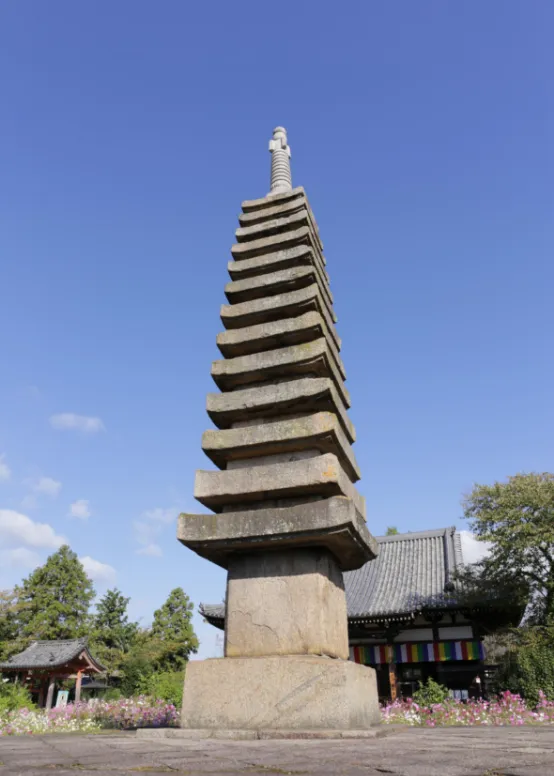
Hannyaji Temple was nearly destroyed during the onset of the Genpei War (1180–1185), a conflict in which the rival Taira and Minamoto clans fought for control of the country. Its ruins stood abandoned until an unnamed monk decided to return the temple to its former glory. The monk commissioned this stone stupa in the Kamakura period (1185–1333) to enshrine relics of the historical Buddha but died soon after its construction began. The stupa was completed by the renowned stonemason I Gyōmatsu (Ch. Yi Xingmo; d. 1260), who immigrated to Japan from what is now the city of Ningbo, China. It is one of the tallest stupas of its kind.
Four buddhas are carved on the stupa’s base as guardians of the cardinal directions: the Medicine Buddha, Yakushi (east); the celestial Buddha, Amida (west); the historical Buddha, Shakyamuni (south); and the future Buddha, Maitreya (north). The significance of the 13 tiers is uncertain. Some believe they represent the 13 courts of the Womb Realm, which forms part of the cosmos in Esoteric Buddhism.
When the stupa was taken apart for repairs in 1964, numerous Buddhist relics, statues, writings, and other sacred objects were discovered inside. The most exciting find was a hollow gilt-bronze statuette of Amida Buddha dating to the Hakuhō period (645–710). This statuette was enshrined in the fifth tier and contained palm-sized figurines of Dainichi Buddha, Eleven-Headed Kannon, and Jizō. -
Kasatōba MonumentsImportant Cultural Property
These stone monuments are the oldest example of stupas made in the kasatōba style, which is distinguished by a roof-like element topped by a round ornament. They were crafted by I Gyōkichi (dates unknown), son of the stonemason I Gyōmatsu (Ch. Yi Xingmo; d. 1260), to commemorate his late father and pray for his mother’s health and longevity. The monuments are inscribed with a section of the Nirvana Sutra written in Sanskrit.
Biographical information about Gyōmatsu is engraved on one of the monuments, including his hometown of Mingzhou (now Ningbo, China). A list of Gyōmatsu’s accomplishments reveals his significant role in the restoration of Nara’s Tōdaiji Temple, as well as in the construction of Hannyaji Temple’s Thirteen-Tier Stone Stupa.
In building the kasatōba monuments, Gyōkichi hoped to accumulate merit for his mother, who was still alive at the time, and help his father’s soul enter the Buddha’s realm. The stupas provide invaluable insight into the life of the master stonemason Gyōmatsu and his lasting impact on Japanese architectural history.
Both monuments were knocked down by anti-Buddhist activists in the Meiji era (1868–1912). The stupas have since been reassembled, but traces of damage remain.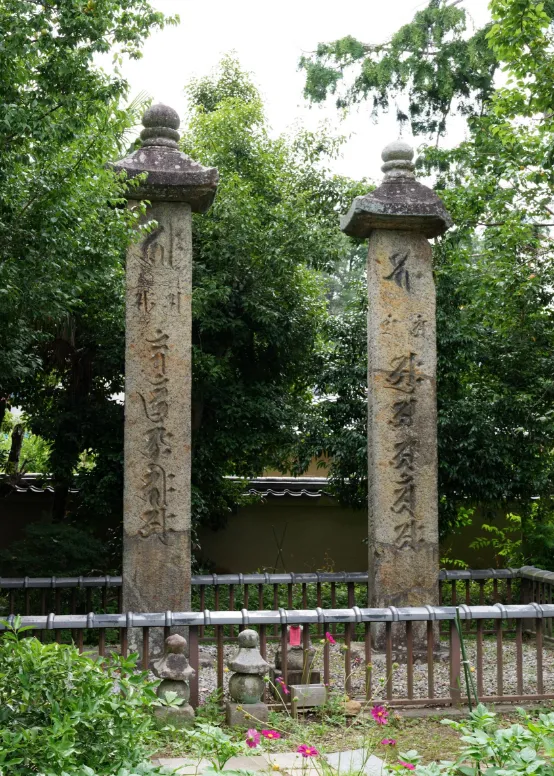
These stone monuments are the oldest example of stupas made in the kasatōba style, which is distinguished by a roof-like element topped by a round ornament. They were crafted by I Gyōkichi (dates unknown), son of the stonemason I Gyōmatsu (Ch. Yi Xingmo; d. 1260), to commemorate his late father and pray for his mother’s health and longevity. The monuments are inscribed with a section of the Nirvana Sutra written in Sanskrit.
Biographical information about Gyōmatsu is engraved on one of the monuments, including his hometown of Mingzhou (now Ningbo, China). A list of Gyōmatsu’s accomplishments reveals his significant role in the restoration of Nara’s Tōdaiji Temple, as well as in the construction of Hannyaji Temple’s Thirteen-Tier Stone Stupa.
In building the kasatōba monuments, Gyōkichi hoped to accumulate merit for his mother, who was still alive at the time, and help his father’s soul enter the Buddha’s realm. The stupas provide invaluable insight into the life of the master stonemason Gyōmatsu and his lasting impact on Japanese architectural history.
Both monuments were knocked down by anti-Buddhist activists in the Meiji era (1868–1912). The stupas have since been reassembled, but traces of damage remain. -
Flame of Peace
This monument to peace protects a flame from one of the fires that burned in the aftermath of the atomic bombing of Hiroshima. The flame was collected by Yamamoto Tatsuo (1916–2004), who brought it back to his hometown of Hoshino, in Fukuoka Prefecture. He kept it burning on his family altar in memory of his uncle, who died in the bombing. The flame was transferred to a peace monument in Hoshino (now part of Yame) in 1968, where it continues to burn to this day.
The Flame of Peace has traveled abroad on several occasions. In 1988, representatives from Japan brought the flame to New York City during the United Nations’ third special session on disarmament. In 2019, a survivor of the atomic bombing of Hiroshima brought a lantern lit by the flame to Vatican City, and Pope Francis (1936–2025) blew the flame out as a symbolic gesture calling for an end to war and nuclear weapons.
The flame was shared with other localities across the country, but it often proved difficult to keep burning. Today, Hannyaji Temple is the only place in Nara that still protects the Flame of Peace. Each year, a memorial service is held here on August 6, the anniversary of the bombing.
The bronze sculpture around the flame depicts people holding hands in solidarity. It is decorated with 1,000 paper cranes folded by children from local preschools. The monument represents Hannyaji’s dedication to promoting a peaceful future.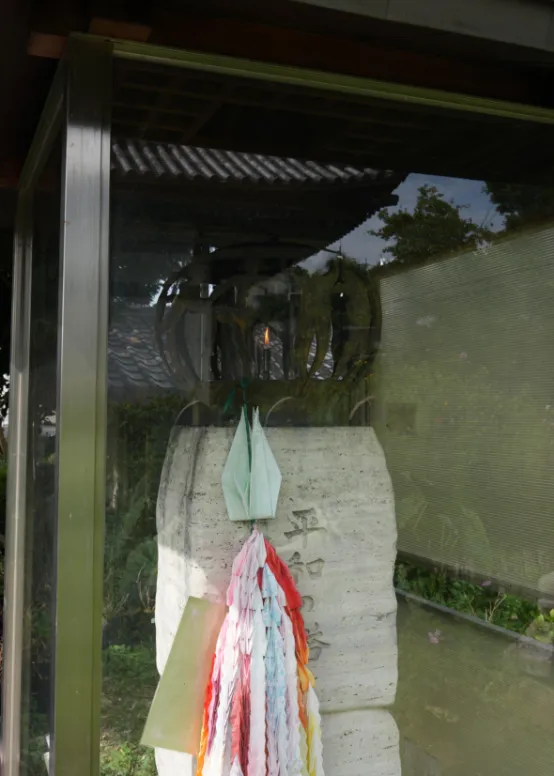
This monument to peace protects a flame from one of the fires that burned in the aftermath of the atomic bombing of Hiroshima. The flame was collected by Yamamoto Tatsuo (1916–2004), who brought it back to his hometown of Hoshino, in Fukuoka Prefecture. He kept it burning on his family altar in memory of his uncle, who died in the bombing. The flame was transferred to a peace monument in Hoshino (now part of Yame) in 1968, where it continues to burn to this day.
The Flame of Peace has traveled abroad on several occasions. In 1988, representatives from Japan brought the flame to New York City during the United Nations’ third special session on disarmament. In 2019, a survivor of the atomic bombing of Hiroshima brought a lantern lit by the flame to Vatican City, and Pope Francis (1936–2025) blew the flame out as a symbolic gesture calling for an end to war and nuclear weapons.
The flame was shared with other localities across the country, but it often proved difficult to keep burning. Today, Hannyaji Temple is the only place in Nara that still protects the Flame of Peace. Each year, a memorial service is held here on August 6, the anniversary of the bombing.
The bronze sculpture around the flame depicts people holding hands in solidarity. It is decorated with 1,000 paper cranes folded by children from local preschools. The monument represents Hannyaji’s dedication to promoting a peaceful future. -
Chinjusha Shrine
This is an example of a Chinjusha, a type of shrine found in Buddhist temples for veneration of local Shinto deities. Historically, it is not uncommon to see Shinto elements in Buddhist temples because the two religions are deeply intertwined. Hannyaji Temple’s Chinjusha dates to the Momoyama period (1573–1603) and provides a glimpse into the centuries-old coexistence between Shinto and Buddhism.
This shrine is dedicated to three of Shinto’s most powerful deities: Amaterasu, Kasuga Daimyōjin, and Hachiman. Amaterasu is the sun goddess and chief deity of the Shinto pantheon. She was incorporated into Shingon Buddhism as Dainichi (literally, “Great Sun”) Buddha, who presides over the cosmos. Kasuga Daimyōjin (known as Kasuga Gongen in Buddhist tradition) is the manifestation of the primary Shinto deities worshipped at Kasuga Taisha Shrine, in central Nara. Hachiman is a Shinto deity of archery and war who was adopted into Buddhism as a bodhisattva and guardian of the Buddha’s teachings.
Although the Meiji government (1868–1912) implemented policies that aimed to formally separate Shinto from Buddhism, this Chinjusha remarkably survived state suppression and the passage of time.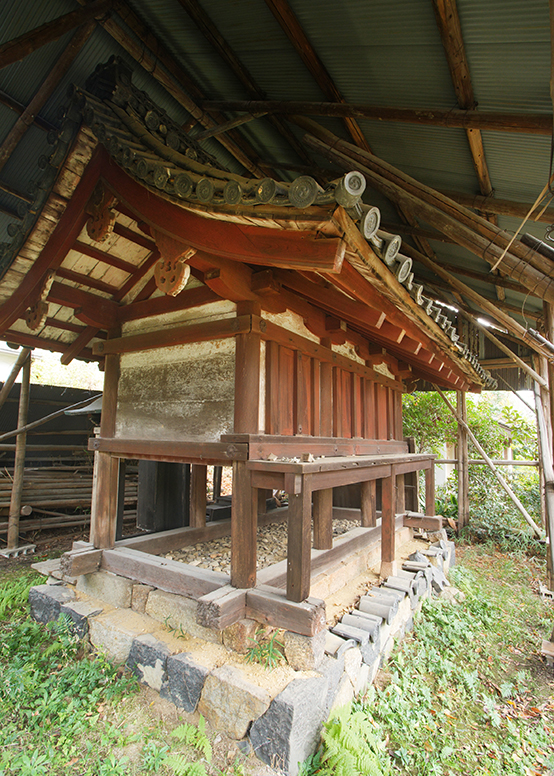
This is an example of a Chinjusha, a type of shrine found in Buddhist temples for veneration of local Shinto deities. Historically, it is not uncommon to see Shinto elements in Buddhist temples because the two religions are deeply intertwined. Hannyaji Temple’s Chinjusha dates to the Momoyama period (1573–1603) and provides a glimpse into the centuries-old coexistence between Shinto and Buddhism.
This shrine is dedicated to three of Shinto’s most powerful deities: Amaterasu, Kasuga Daimyōjin, and Hachiman. Amaterasu is the sun goddess and chief deity of the Shinto pantheon. She was incorporated into Shingon Buddhism as Dainichi (literally, “Great Sun”) Buddha, who presides over the cosmos. Kasuga Daimyōjin (known as Kasuga Gongen in Buddhist tradition) is the manifestation of the primary Shinto deities worshipped at Kasuga Taisha Shrine, in central Nara. Hachiman is a Shinto deity of archery and war who was adopted into Buddhism as a bodhisattva and guardian of the Buddha’s teachings.
Although the Meiji government (1868–1912) implemented policies that aimed to formally separate Shinto from Buddhism, this Chinjusha remarkably survived state suppression and the passage of time. -
Belfry
This belfry was built in 1694 to protect Hannyaji Temple’s first hanging bell in centuries. The previous bell had been donated to Kōfukuji Temple in 1491.
During the belfry’s construction, workers discovered an underground chamber. Inside the chamber was a box containing a nyoihōju (Sk. cintamani), a sacred jewel in Buddhist tradition said to grant wishes. The jewel is thought to have been placed there by Ninshō (1217–1303), a monk who greatly contributed to Hannyaji’s flowering. The jewel has since been lost, but its box survives.
The bell was nearly confiscated during the Second World War, when the government began collecting metal from around the country to melt down for weaponry. Although many temple bells were seized for this purpose, Hannyaji submitted a petition to keep its bell, citing its historic and artistic value. In a rare departure from policy, the request was approved. The bell continues to be rung today during temple services and ceremonies.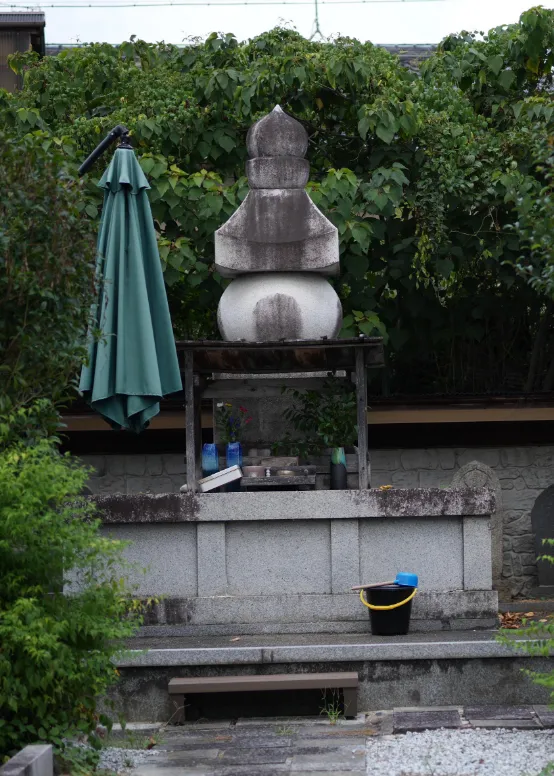
This belfry was built in 1694 to protect Hannyaji Temple’s first hanging bell in centuries. The previous bell had been donated to Kōfukuji Temple in 1491.
During the belfry’s construction, workers discovered an underground chamber. Inside the chamber was a box containing a nyoihōju (Sk. cintamani), a sacred jewel in Buddhist tradition said to grant wishes. The jewel is thought to have been placed there by Ninshō (1217–1303), a monk who greatly contributed to Hannyaji’s flowering. The jewel has since been lost, but its box survives.
The bell was nearly confiscated during the Second World War, when the government began collecting metal from around the country to melt down for weaponry. Although many temple bells were seized for this purpose, Hannyaji submitted a petition to keep its bell, citing its historic and artistic value. In a rare departure from policy, the request was approved. The bell continues to be rung today during temple services and ceremonies. -
Ninshō Memorial
This stupa enshrines the remains of the monk Ninshō (1217–1303), who made significant contributions to the restoration of Hannyaji Temple and its efforts to support the less fortunate. Ninshō was a devotee of Monju, the bodhisattva of wisdom and a guardian of the poor and sick.
Ninshō entered the priesthood at the age of 16 to honor his mother’s dying wish. In his later fundraising efforts for the reconstruction of Saidaiji Temple, in western Nara, he met and became a disciple of the prominent monk Eison (1201–1290). Together, Ninshō and Eison delivered lectures on Monju’s teachings and enshrined statues of the bodhisattva at various temples across the country.
Like Eison, Ninshō devoted himself to serving the most vulnerable and persecuted members of society, including people convicted of crimes. Both master and disciple believed the Buddha shows equal compassion to all living beings, regardless of their social status, and this belief was reflected in their countless charitable acts. Ninshō hosted Buddhist lectures for the marginalized and helped build infirmaries dedicated to treating people with leprosy. He is even said to have personally carried patients into town on his back.
Ninshō’s passion for helping those in need left a lasting mark on history, and his remains have been enshrined at several temples, including Chikurinji Temple in northern Nara Prefecture. Chikurinji generously shared a portion of Ninshō’s remains with Hannyaji, and they are interred in this stupa.
This stupa enshrines the remains of the monk Ninshō (1217–1303), who made significant contributions to the restoration of Hannyaji Temple and its efforts to support the less fortunate. Ninshō was a devotee of Monju, the bodhisattva of wisdom and a guardian of the poor and sick.
Ninshō entered the priesthood at the age of 16 to honor his mother’s dying wish. In his later fundraising efforts for the reconstruction of Saidaiji Temple, in western Nara, he met and became a disciple of the prominent monk Eison (1201–1290). Together, Ninshō and Eison delivered lectures on Monju’s teachings and enshrined statues of the bodhisattva at various temples across the country.
Like Eison, Ninshō devoted himself to serving the most vulnerable and persecuted members of society, including people convicted of crimes. Both master and disciple believed the Buddha shows equal compassion to all living beings, regardless of their social status, and this belief was reflected in their countless charitable acts. Ninshō hosted Buddhist lectures for the marginalized and helped build infirmaries dedicated to treating people with leprosy. He is even said to have personally carried patients into town on his back.
Ninshō’s passion for helping those in need left a lasting mark on history, and his remains have been enshrined at several temples, including Chikurinji Temple in northern Nara Prefecture. Chikurinji generously shared a portion of Ninshō’s remains with Hannyaji, and they are interred in this stupa. -
Statue of Monju atop a LionImportant Cultural Property
This statue of the bodhisattva Monju is the principal image of worship at Hannyaji Temple. A bodhisattva is one who vows to attain Buddhahood but delays their entrance into nirvana to help others reach enlightenment. Monju is the bodhisattva of transcendent wisdom (hannya), the true, unbiased understanding of the world. To test adherents’ prejudices, Monju is said to appear in the form of someone in need. Therefore, the deity came to be seen as a guardian of disadvantaged groups, such as the poor and sick. The significance of Monju to the temple is evident in its history of distributing alms and providing education for the lower classes.
This statue dates to 1324 and depicts Monju sitting atop a mythical shishi lion. The formidable roar of a shishi is said to induce silence, allowing Buddhist deities to share their teachings. The number of knots in Monju’s hair corresponds to the number of syllables in the deity’s different mantras, or sacred utterances. Five knots is the most common, which represent a five-syllable mantra about love and divine protection. This statue depicts Monju with eight knots of hair, symbolizing an eight-syllable mantra that wards off misfortune. In the right hand, Monju holds a sword of wisdom; in the left hand, Monju holds the Perfection of Transcendent Wisdom Sutra with lotus flowers placed atop it. The robes are decorated with intricate gold patterns.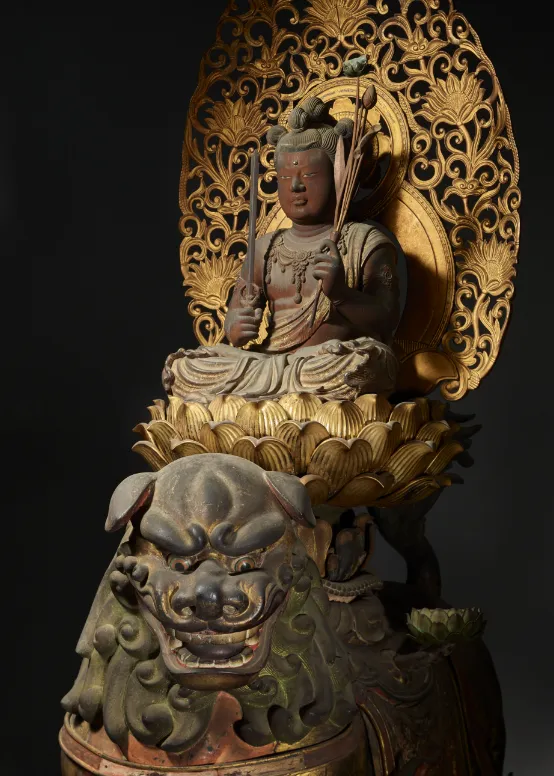
This statue of the bodhisattva Monju is the principal image of worship at Hannyaji Temple. A bodhisattva is one who vows to attain Buddhahood but delays their entrance into nirvana to help others reach enlightenment. Monju is the bodhisattva of transcendent wisdom (hannya), the true, unbiased understanding of the world. To test adherents’ prejudices, Monju is said to appear in the form of someone in need. Therefore, the deity came to be seen as a guardian of disadvantaged groups, such as the poor and sick. The significance of Monju to the temple is evident in its history of distributing alms and providing education for the lower classes.
This statue dates to 1324 and depicts Monju sitting atop a mythical shishi lion. The formidable roar of a shishi is said to induce silence, allowing Buddhist deities to share their teachings. The number of knots in Monju’s hair corresponds to the number of syllables in the deity’s different mantras, or sacred utterances. Five knots is the most common, which represent a five-syllable mantra about love and divine protection. This statue depicts Monju with eight knots of hair, symbolizing an eight-syllable mantra that wards off misfortune. In the right hand, Monju holds a sword of wisdom; in the left hand, Monju holds the Perfection of Transcendent Wisdom Sutra with lotus flowers placed atop it. The robes are decorated with intricate gold patterns. -
Standing Statuette of Amida BuddhaImportant Cultural Property
This bronze statuette of Amida Buddha was discovered during restoration work on the Thirteen-Tier Stone Stupa in 1964. It was enshrined in the fifth tier of the stupa.
The 40.9-centimeter statuette was originally plated in gold. It depicts Amida Buddha with a large head and relatively small body, a popular style in the Hakuhō period (645–710). A gentle smile radiates from the charming, youthful face. The relatively large size of the hands is thought to symbolize Amida’s benevolent power of universal salvation, as though the deity is cupping the world in them. Here, the figure’s hands form the raigō-in mudra, a gesture that welcomes souls into Amida’s Pure Land, where none suffer. The statuette is the oldest example of Amida depicted with this mudra, and it is believed to have belonged to the great-grandmother of Emperor Shōmu (701–756).
The statuette’s base once contained palm-sized figurines of Dainichi Buddha, Eleven-Headed Kannon, and Jizō. The Cosmic Buddha Dainichi is a central figure within Esoteric Buddhism. Kannon and Jizō are bodhisattvas, or Buddhist figures who postpone their own entrance into nirvana to help others attain enlightenment.
The statuette of Amida Buddha, the sculptures concealed within it, and other historical treasures found inside the stupa are publicly displayed in the autumn each year.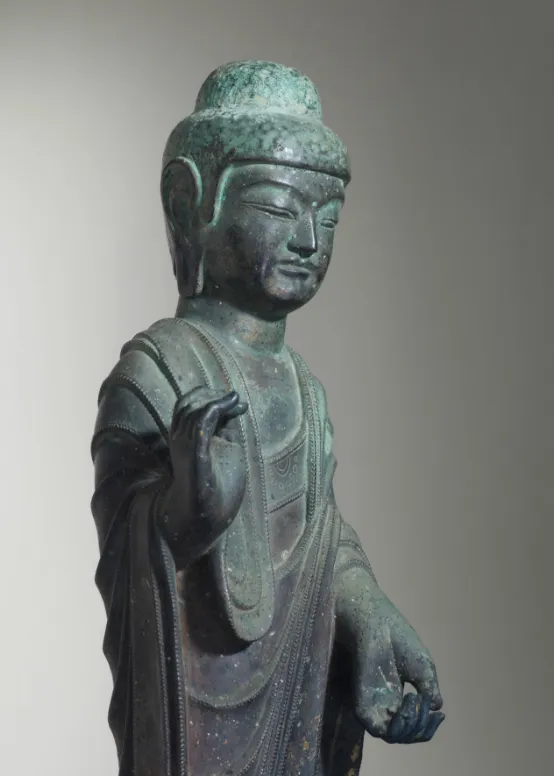
This bronze statuette of Amida Buddha was discovered during restoration work on the Thirteen-Tier Stone Stupa in 1964. It was enshrined in the fifth tier of the stupa.
The 40.9-centimeter statuette was originally plated in gold. It depicts Amida Buddha with a large head and relatively small body, a popular style in the Hakuhō period (645–710). A gentle smile radiates from the charming, youthful face. The relatively large size of the hands is thought to symbolize Amida’s benevolent power of universal salvation, as though the deity is cupping the world in them. Here, the figure’s hands form the raigō-in mudra, a gesture that welcomes souls into Amida’s Pure Land, where none suffer. The statuette is the oldest example of Amida depicted with this mudra, and it is believed to have belonged to the great-grandmother of Emperor Shōmu (701–756).
The statuette’s base once contained palm-sized figurines of Dainichi Buddha, Eleven-Headed Kannon, and Jizō. The Cosmic Buddha Dainichi is a central figure within Esoteric Buddhism. Kannon and Jizō are bodhisattvas, or Buddhist figures who postpone their own entrance into nirvana to help others attain enlightenment.
The statuette of Amida Buddha, the sculptures concealed within it, and other historical treasures found inside the stupa are publicly displayed in the autumn each year. -
Thirty-Three Stone Relief Carvings of Kannon
These stone carvings of Kannon, the bodhisattva of compassion, were donated to Hannyaji Temple by a parishioner whose leg was healed after praying at the temple. Kannon is one of the most beloved Buddhist deities in Japan and the focal point of the Saikoku Kannon Pilgrimage. Each of the 33 Kannon carvings represents a temple on this ancient pilgrimage route, which passes through six prefectures in the Kansai region.
Although Hannyaji itself is not part of the pilgrimage, its carvings enable parishioners who cannot undertake the physically demanding journey to complete a miniaturized version of the pilgrimage and gain merit toward their rebirth in the Pure Land.
The donation of these stone carvings helped revitalize Hannyaji during a period of decline in the early Edo period (1603–1867). It brought attention to the neglected temple and prompted repairs to the Thirteen-Tier Stone Stupa, which had been badly damaged by an earthquake. The 33 carvings originally lined the base of the stupa but were eventually moved near the Main Hall.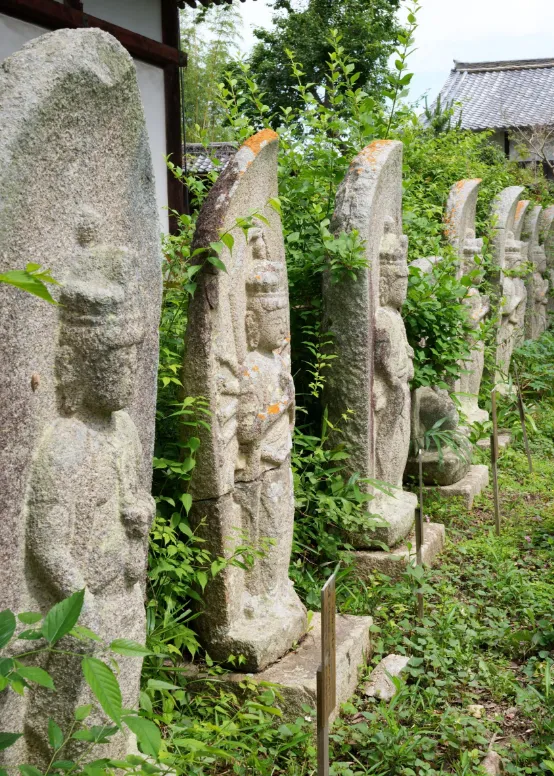
These stone carvings of Kannon, the bodhisattva of compassion, were donated to Hannyaji Temple by a parishioner whose leg was healed after praying at the temple. Kannon is one of the most beloved Buddhist deities in Japan and the focal point of the Saikoku Kannon Pilgrimage. Each of the 33 Kannon carvings represents a temple on this ancient pilgrimage route, which passes through six prefectures in the Kansai region.
Although Hannyaji itself is not part of the pilgrimage, its carvings enable parishioners who cannot undertake the physically demanding journey to complete a miniaturized version of the pilgrimage and gain merit toward their rebirth in the Pure Land.
The donation of these stone carvings helped revitalize Hannyaji during a period of decline in the early Edo period (1603–1867). It brought attention to the neglected temple and prompted repairs to the Thirteen-Tier Stone Stupa, which had been badly damaged by an earthquake. The 33 carvings originally lined the base of the stupa but were eventually moved near the Main Hall.