
-

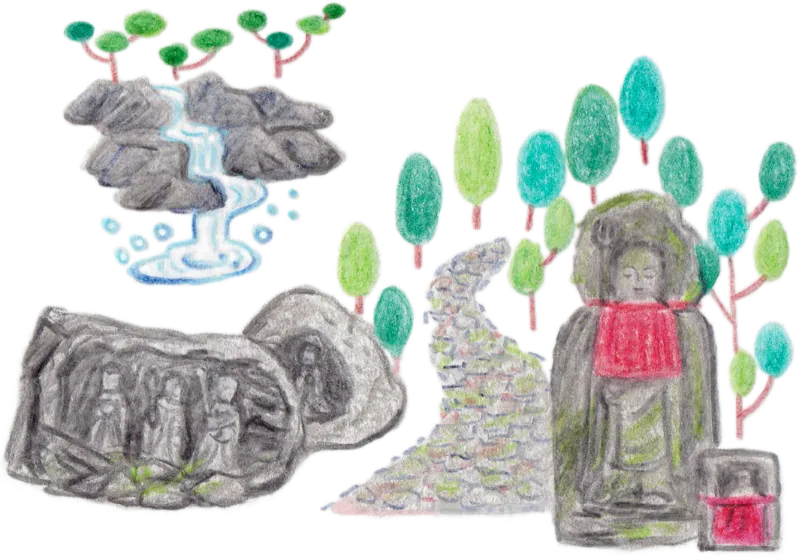
Upon arriving at Enjōji Temple, it is recommended to walk around to the south side first and from the rōmon gate, take time to look out slowly over the entire temple precinct across the Pure Land–style garden before beginning your visit. After that, you can view the main hall, the Tahōtō pagoda, and the Sōō-den Hall, completed in 2018, which enshrines a Dainichi Nyorai statue carved by Unkei, all of which stand on slightly higher ground than the garden. This ancient temple always has a calm and gentle atmosphere, but it is especially beautiful in spring, when fresh green leaves appear, and in autumn, when the garden and grounds are coloured by autumn foliage. Enjōji lies along the route known as the Yagyū Kaidō, once travelled by master swordsmen. Even if you arrive by car or bus, it is worth walking a short stretch of the Yagyū Kaidō, allowing your thoughts to drift back to earlier times.
From JR Nara Station or Kintetsu Nara Station, take a Nara Kōtsū bus for approximately 40 minutes, get off at “Ninnjō-zan”, and the stop is immediately adjacent to Enjōji Temple. -
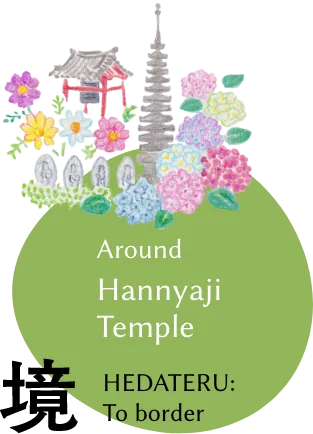
The area around Hannyaji Temple lay on the kimon - the north-eastern “demon gate” of the capital - during the Nara period, marking the outer edge of the city to the north-east. Heading north from Hannyaji brings you to Naratsuhiko Shrine, said to have been founded in the Nara period. The shrine enshrines Prince Shiki, father of Emperor Kōnin, the last emperor of the Nara period, along with Prince Kasuga, among others. The shrine is known for its Okina-mai dance, designated an Important Intangible Cultural Property. Tradition holds that the dance originated when Prince Kasuga’s two sons dedicated it in prayer for his recovery from illness. After the capital was moved to Kyoto, this area became a gateway from the new capital into Nanto (Nara). At times it welcomed travellers; at other times, it was the route by which the fires of war reached the old city. It was also here, in the Kamakura period, that Ninshō, a disciple of Eison, who had restored Hannyaji, established Kitayama Jūhachikento, a facility to care for sufferers of serious illnesses such as Hansen’s disease. This location, away from the developing urban centres around Tōdaiji Temple and Kōfukuji Temple, may have been chosen precisely because it lay on the threshold between city and periphery.
From JR Nara Station or Kintetsu Nara Station, take a Nara Kōtsū bus for approximately 15 minutes, get off at “Hannyaji”, then walk for about 3 minutes to Hannyaji Temple. -
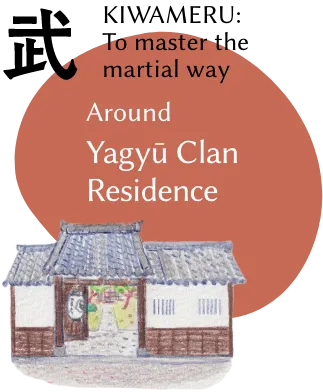
When people think of Yagyū, many immediately picture the master swordsmen of the Yagyū clan and their Yagyū Shinkage-ryū tradition. A visit to the former retainer residence or the remains of the domain headquarters vividly conveys how the Yagyū family earned the deep trust of successive Tokugawa shoguns through their distinctive school of swordsmanship. The Yagyū Kaidō is known as a road once travelled by swordsmen, but the many stone Buddhas scattered along the route also tell an older story. This was a path used by mountain ascetics and other religious practitioners. It became an everyday route of life connecting Higashisanchū with Kun’naka, the Nara city area. The Yagyū Kaidō is approximately 16 kilometres in length. With Enjōji Temple at the midpoint as a reference, visitors can combine walking with travel by car or bus, making the journey manageable without overexertion. The area is well suited to themed visits, such as “following in the footsteps of master swordsmen” or “encountering ancient megalithic and rock-worship traditions.”
From JR Nara Station or Kintetsu Nara Station, take the Nara Kōtsū bus for around 50 minutes, get off at stop for “Yagyū”, then walk for about 5 minutes to the Yagyū Family Retainer Residence. -
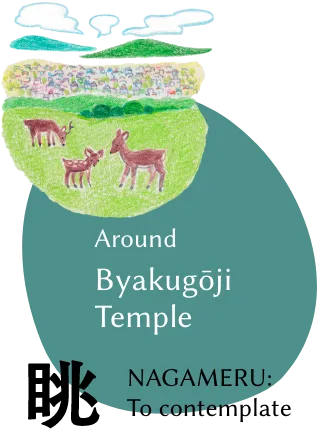
Heading east from Mt. Takamado, with Byakugōji Temple on its western foothills, one arrives at Tawara village. This is an area where tea fields and farmland spread out across the landscape, interspersed with ancient burial mounds and other historical sites. One of the first points of interest is Tawara Saikyō, believed to be the tomb of Prince Shiki, who is also said to have maintained a detached palace in the area where Byakugōji now stands. When his seventh son later ascended the throne as Emperor Kōnin, Prince Shiki was posthumously granted the title Emperor Kasuga-no-miya. For this reason, the mausoleum is also known as the Kasuga-no-miya Imperial Tomb, and nearby stands Kasuga-no-miya Shrine.
A short distance away lies Tawara Tōryō, the imperial mausoleum of Emperor Kōnin himself. Since ancient times, local people have referred to this site as “Ō-baka” or “Ō-no-tsuka” (“the King’s Tomb”). Also located in a corner of Tawara’s tea fields is the tomb of Ō no Yasumaro, compiler of the Kojiki, which was discovered by chance in 1978 and designated a National Historic Site. The excavated funerary inscription, the Ō no Yasumaro Tomb Epitaph, has been designated a National Treasure. Other notable sights in the area include Imaido Tenman Shrine and Kiritsuke Jizō, among others.From JR Nara Station or Kintetsu Nara Station, take the Nara Kōtsū bus for around 20 minutes, and get off at the “Takabatakechō” stop. The walk to Byakugōji Temple is about 20 minutes.
